Choosing the best stainless steel cable supplier in China requires more than comparing prices on a product page. A dependable supplier should understand cable construction, material grades, surface finishes, and application risks. For example, 304 stainless steel may suit indoor projects, while 316 stainless steel often performs better near saltwater. Small details matter.
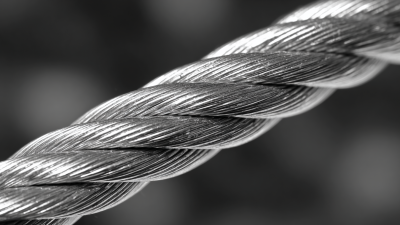
An experienced supplier should provide clear specifications for diameter, strand structure, tensile strength, and breaking load. Common constructions, such as 1x19, 7x7, and 7x19, offer different balances between stiffness and flexibility. Reliable manufacturers can also share material certificates, inspection records, production photographs, and sample results. These documents should match the actual shipment, not only the sales presentation.
Factory experience matters.
A serious evaluation may include reviewing machinery, checking packaging, and testing a sample before placing a large order. Look for consistent swaging, clean cutting, accurate lengths, and smooth fittings. Communication is another practical test. Does the supplier explain limitations honestly? Does it respond clearly when drawings change? No supplier is perfect. Even strong manufacturers may have delays, unclear documentation, or occasional quality issues. That is why verification should continue throughout the purchasing process.
The best stainless steel cable supplier is not always the cheapest option. It is the partner that combines technical knowledge, stable production, transparent quality control, and dependable after-sales support. This guide examines those factors carefully, while recognizing that project conditions, budget, climate, and required certifications can change the final decision.
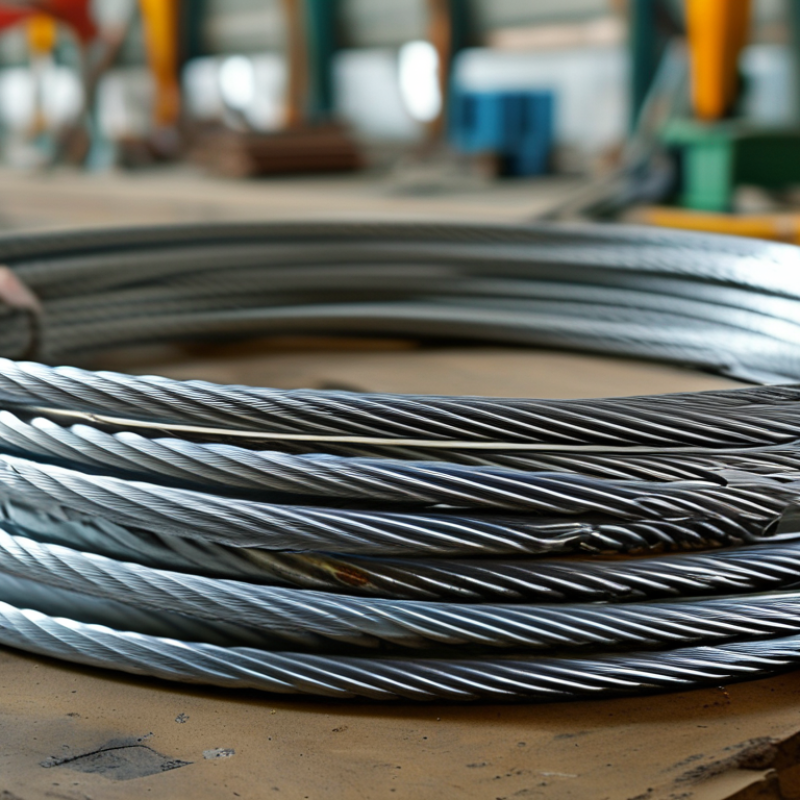
A reliable stainless steel cable supplier in China proves quality through repeatable evidence, not attractive promises. The supplier should explain cable construction, including strand pattern, diameter tolerance, and breaking load. Ask whether the cable uses 304 or 316 stainless steel. The answer should match the application, exposure, and maintenance plan. Small details matter. A capable technical team checks drawings before quoting. They also flag unsuitable fittings, sharp bends, or excessive working loads. This shows practical experience rather than simple order processing.
Documentation must follow each production batch. Look for material certificates, tensile test records, dimensional reports, and clear lot numbers. Independent testing can strengthen confidence when the cable serves lifting, marine, architectural, or safety-related work. A supplier should explain test methods and limits in plain language. Traceability matters. If one coil has a defect, its source should be identifiable within hours, not after weeks of emails. Packaging also deserves attention. Ends should be capped, coils protected from moisture, and labels readable on arrival.
Communication reveals reliability early. A trustworthy supplier confirms lead times, sample costs, tolerances, and after-sales responsibilities in writing. They should answer difficult questions without hiding behind vague certificates. Price alone misleads. An unusually low quote may omit testing, inspection, or suitable fittings. I would still inspect the facility when possible, because polished documents cannot show every production habit. Even experienced buyers can overlook corrosion risks or incorrect cable selection. That weakness deserves review, not denial. A dependable supplier welcomes technical feedback and corrects measurable problems before shipment.
A practical supplier-evaluation framework based on material traceability, manufacturing capability, quality control, compliance, delivery performance, and technical support.
| Evaluation Dimension | Recommended Benchmark | Evidence to Request | Why It Matters | Priority |
|---|---|---|---|---|
| Stainless Steel Grade Selection | Common options should include 304, 316, and 316L, with grade selection matched to moisture, salt exposure, chemicals, temperature, and load conditions. | Material specification, product data sheet, and written confirmation of the supplied grade for each order. | 316 and 316L generally provide better resistance to chloride-rich environments than 304, but the correct grade depends on the application. | High |
| Material Traceability | Each production batch should be traceable from the finished cable back to the raw-material heat or batch number. | Heat-number records, batch identification, packing labels, and a certificate of conformity or inspection certificate. | Traceability supports root-cause analysis, consistent quality, and controlled replacement if a nonconformity is discovered. | High |
| Material Certification | For critical applications, request a material certificate with chemical composition and mechanical properties; EN 10204 Type 3.1 may be appropriate when independently validated mill data is required. | Signed material certificate, chemical analysis, mechanical test results, and matching batch numbers. | Certification helps verify that the cable is made from the specified stainless steel rather than a visually similar substitute. | High |
| Construction and Diameter Control | The supplier should offer the required construction, such as 1×19, 7×7, or 7×19, with tolerances agreed before production. | Technical drawing, construction description, measured-diameter records, and sample approval documentation. | Construction affects flexibility, fatigue behavior, strength, appearance, and compatibility with terminals or pulleys. | High |
| Breaking Load Verification | Minimum breaking force should be stated for each diameter and construction, with values verified against the applicable specification or approved drawing. | Test report showing sample size, test method, measured breaking force, date, and equipment identification. | Breaking load is essential for safe design, but it should not be treated as the same value as the permitted working load. | High |
| Surface Finish and Corrosion Resistance | Wire surfaces should be clean, smooth, and free from harmful cracks, deep scratches, rust, oil contamination, or obvious processing defects. | Incoming and final visual inspection records, surface-finish criteria, and corrosion-test information when required by the application. | Surface condition influences corrosion performance, appearance, fatigue life, and safe handling during installation. | High |
| Standards and Compliance | Products should be manufactured and inspected according to clearly identified customer specifications and relevant wire-rope or wire-product standards. | Applicable standard list, inspection plan, test procedures, declarations of conformity, and any required third-party certificates. | Clear compliance requirements reduce ambiguity and make technical comparisons between quotations more reliable. | High |
| Quality Management System | A documented quality system should cover incoming materials, production checks, final inspection, nonconforming products, and corrective actions. | Quality manual summary, inspection plan, calibration records, audit results, and corrective-action examples with confidential details removed. | A repeatable quality system is more dependable than relying only on final visual inspection or individual operator experience. | High |
| Testing and Inspection Equipment | Testing equipment should be suitable for diameter measurement, tensile or breaking-load testing, and any application-specific inspection. | Equipment list, calibration certificates, test records, and details of whether testing is performed in-house or by an independent laboratory. | Calibrated equipment improves the reliability and repeatability of reported measurements. | Medium |
| Customization Capability | The supplier should be able to control diameter, construction, cut length, end termination, packaging, and inspection requirements within an approved specification. | Engineering drawings, sample-development process, first-article inspection report, and written change-control procedure. | Customization is important when standard cable sizes do not meet load, flexibility, installation, or appearance requirements. | Medium |
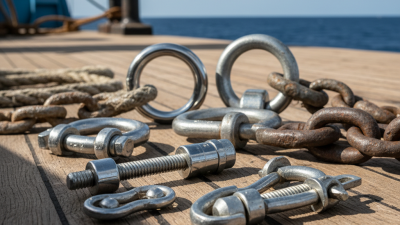
| End Fittings and Terminations | Terminals, swage sleeves, loops, thimbles, or threaded ends should be selected and tested for the cable construction and intended load. | Assembly drawings, fitting material details, pull-test results, dimensional inspection records, and installation instructions. | A properly manufactured cable can still fail if the termination is unsuitable, incorrectly assembled, or insufficiently tested. | High |
| Production Capacity and Lead Time | The supplier should provide a realistic lead-time range for samples, standard orders, customized orders, and repeat production. | Capacity statement, production schedule, order milestones, inventory policy, and historical on-time delivery data where available. | Transparent capacity planning reduces the risk of missed installation dates and rushed quality decisions. | Medium |
| Packaging and Export Protection | Cable should be protected against moisture, contamination, deformation, and tangling during inland transport, sea freight, or long-term storage. | Packaging specification, reel or coil dimensions, moisture-protection method, photographs, and shipping-mark requirements. | Appropriate packaging helps preserve surface condition and prevents handling damage before installation. | Medium |
| Technical Communication | The supplier should provide clear answers on grade, construction, tolerance, breaking force, working conditions, fittings, and inspection requirements. | Completed technical questionnaire, approved drawings, response time records, and a designated technical contact. | Accurate technical communication prevents specification gaps that may cause delays, rework, or unsafe selection. | High |
| Sample and Pre-Production Approval | For customized or safety-related products, samples should be reviewed and approved before full-scale production. | Sample inspection report, dimensional measurements, test results, approval signature, and revision-controlled reference sample. | Pre-production approval confirms that the supplier has understood the specification before larger quantities are manufactured. | High |
| After-Sales and Nonconformity Handling | A documented process should exist for complaints, replacement, corrective action, warranty evaluation, and retained samples. | Complaint procedure, response-time commitment, corrective-action report template, and warranty terms. | Responsive support protects project continuity and demonstrates accountability after delivery. | Medium |
| Total Cost of Ownership | Compare material grade, construction, test requirements, fittings, packaging, freight, inspection, replacement risk, and service life—not only unit price. | Itemized quotation, alternative specifications, tooling charges, inspection costs, freight assumptions, and validity period. | The lowest initial price may create higher costs if the cable has shorter service life, inconsistent dimensions, or inadequate documentation. | High |
Practical selection rule: A reliable supplier should be able to provide verifiable material traceability, consistent dimensional and load performance, clear technical documentation, suitable testing, and dependable communication. Final cable selection should be reviewed against the specific application, installation method, environmental exposure, safety factor, and applicable local regulations.