How to Choose the Right Steel Wire Rope for Your Project?
Choosing the right steel wire rope for your project is crucial. Industry expert John Smith, a veteran in fabricating lifting equipment, once said, "Selecting the right steel wire rope can make or break a project." This statement emphasizes the importance of making informed choices.
Steel wire ropes come in various sizes and types. Each design serves different applications. A wrong selection can lead to inefficiencies or safety hazards. For example, a lighter rope may not support heavy loads. Conversely, a heavier rope may be unnecessarily cumbersome for lighter tasks.
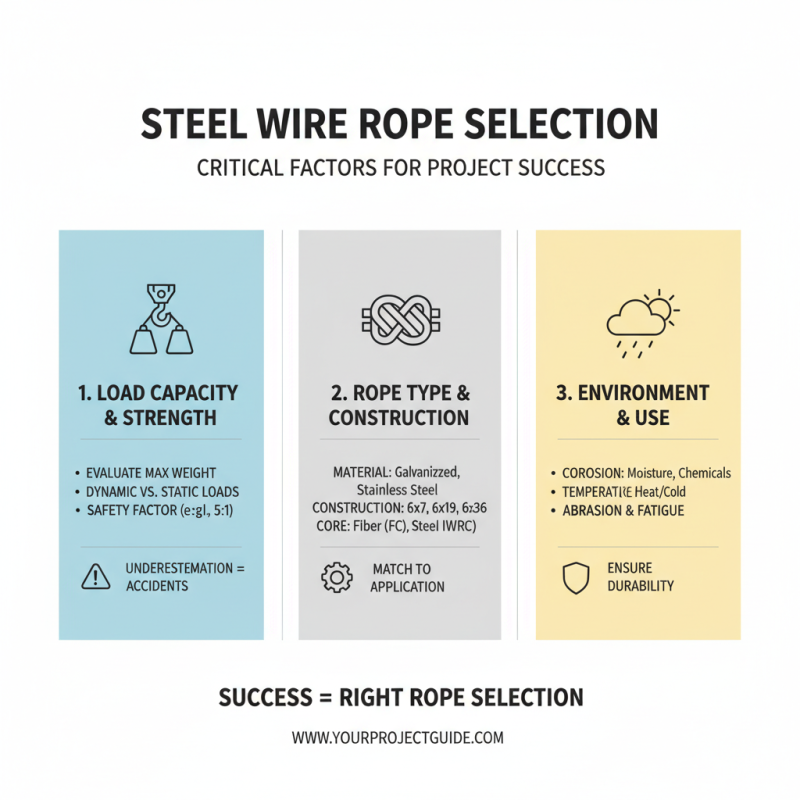
Understanding the specifications is key. Diameter, construction, and material play significant roles in performance. However, it can be overwhelming. Consider the environment where the rope will be used. Will it face abrasion, corrosion, or extreme temperatures? These factors are often overlooked yet crucial for longevity. Making a choice under pressure can lead to oversight. Reflecting on various options may seem tedious but is essential for project success.
Understanding the Different Types of Steel Wire Rope and Its Applications
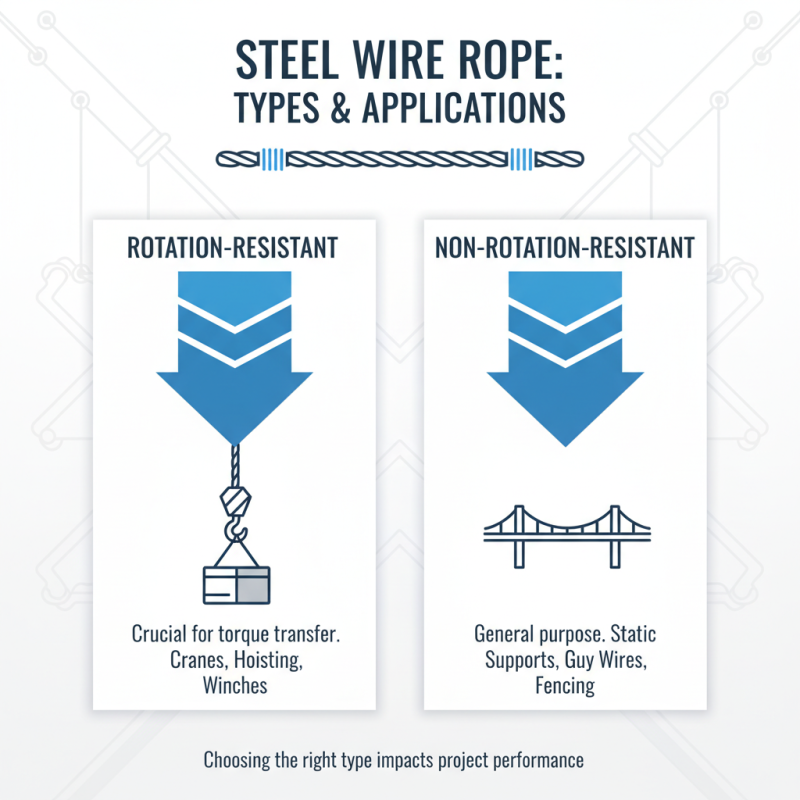
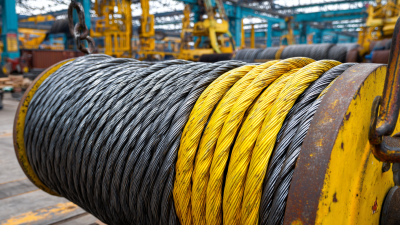
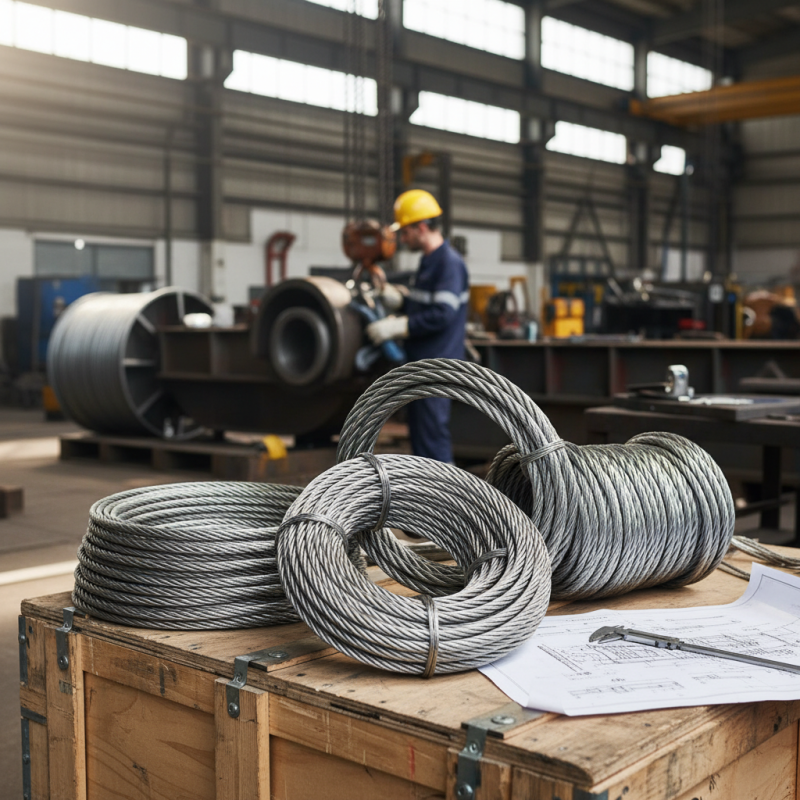
When choosing steel wire rope, understanding the various types can greatly impact your project. Steel wire ropes are classified based on their construction, materials, and intended applications. Generally, they fall into two main categories: rotation-resistant and non-rotation-resistant ropes. The former is crucial for applications where torque transfer is essential, such as cranes and hoisting.
In the construction industry, steel wire ropes often undergo extensive use. According to industry reports, around 30% of reported accidents are linked to improper rope selection. For example, a standard 6x19 wire rope is suitable for lifting and towing, while 6x37 ropes offer better flexibility and fatigue resistance, ideal for applications that involve bending. Failure to choose the correct type can lead to severe performance issues and safety hazards.
Material considerations also play a crucial role. Galvanized steel provides great corrosion resistance, while stainless steel offers higher strength and durability in harsh environments. Each material has its pros and cons. A misconception is that thicker ropes are always stronger. This is not always true, as proper design and the right type are equally essential. Make sure to weigh these factors when selecting a wire rope for your needs.
Evaluating Load Capacity and Strength Requirements for Your Project
Choosing the right steel wire rope is essential for your project's success. Evaluating load capacity and strength requirements is a critical step. You need to understand how much weight your cable will carry. Different projects have varying demands. According to industry reports, many accidents occur due to underestimating load requirements.
When assessing load capacity, consider dynamic and static loads. Dynamic loads are those that change, while static loads do not. The capacity of steel wire ropes can vary from 1,500 to over 200,000 pounds, depending on the diameter and construction. For heavy lifting, a safety factor of at least five is often recommended.
**Tips:** Always account for environmental factors. Corrosion can weaken steel, affecting strength. Consider using wire ropes with a protective coating. Another tip is to calculate the maximum load before installation. This prevents overloading. Regular inspections are essential to maintain safety.
Remember, not all projects are straightforward. Some may require fine-tuning. Make sure to re-evaluate your needs as they change. A thoughtful approach to load capacity ensures durability and safety.
Considering Environmental Factors That Affect Steel Wire Rope Longevity
When selecting steel wire rope for your project, environmental factors play a crucial role. Extreme temperatures can weaken the wire. High humidity levels can lead to corrosion. If a rope is exposed to saltwater, the deterioration rate increases rapidly.
Consider where the rope will be used. Will it face direct sunlight or harsh weather?
Another point to reflect on is the maintenance routine. Regular inspections can help identify potential issues. However, many forget to check their equipment often. Failing to perform routine assessments may lead to drastic failures. Dust and debris can accumulate and compromise the rope’s integrity over time.
Choosing the right coating can also extend longevity. Some coatings provide better protection against environmental wear. Yet, they come with trade-offs.
Balance between cost and durability is essential. Don't overlook that functional performance may vary with different coatings. Ensure you are making informed choices. Think critically about each factor before the final decision.
Choosing the Right Coating and Finish for Your Steel Wire Rope
Choosing the right coating and finish for steel wire rope is crucial. The coating affects not only the rope's strength but also its resistance to environmental factors. For outdoor projects, consider a galvanized finish. This option offers good protection against corrosion. However, it can wear off over time. Regular inspections are necessary to ensure safety.
Another choice is plastic coating. This provides a smoother surface and reduces friction. It also enhances protection against rust. Yet, not all plastic coatings are created equal. Some may chip or peel, exposing the wire rope beneath. Always evaluate the conditions the rope will face. For instance, will it be in saltwater? Or exposed to heavy abrasion?
Lastly, think about how your project will stress the rope. If it's under extreme loads, a more robust coating is essential. Often, balancing durability and cost is challenging. There are no perfect solutions, only options to consider. Be prepared to test different finishes to find the best fit for your needs.
How to Choose the Right Steel Wire Rope for Your Project?
| Wire Rope Type |
Diameter (mm) |
Breaking Strength (kN) |
Coating Type |
Finish Type |
| 7x19 |
5 |
20.0 |
Galvanized |
Standard |
| 7x7 |
6 |
25.0 |
Polyester Coated |
Bright |
| 8x19 |
7 |
30.0 |
Stainless Steel |
Galvanized |
| 6x36 |
8 |
40.0 |
PVC Coated |
Standard |
| 19x7 |
10 |
50.0 |
Coated |
Bright |
Assessing Safety Standards and Regulations for Wire Rope Usage
When selecting steel wire rope for your project, safety standards and regulations are paramount. These guidelines ensure that your wire rope can handle the intended load without compromising safety. Whether in construction or maritime applications, the wire rope must comply with local safety codes. Always check for certifications and testing results before purchase.
Tips: Review regulations specific to your industry. They differ widely, reflecting the unique risks involved. Having a clear understanding will aid in making informed choices.
Understanding the load requirements is essential. Wire ropes come in various grades and specifications. Ensure that the chosen rope matches or exceeds the maximum load anticipated in your project. Misjudging this can lead to serious accidents.
Tips: Consult with experts if uncertain. They can provide insights on safety measures and suitable products. Remember, investing in quality may save on costs in the long run. Prioritize safety; it’s better to overestimate than to risk failure.