How to Choose the Right Stainless Steel U Bolts for Your Project?
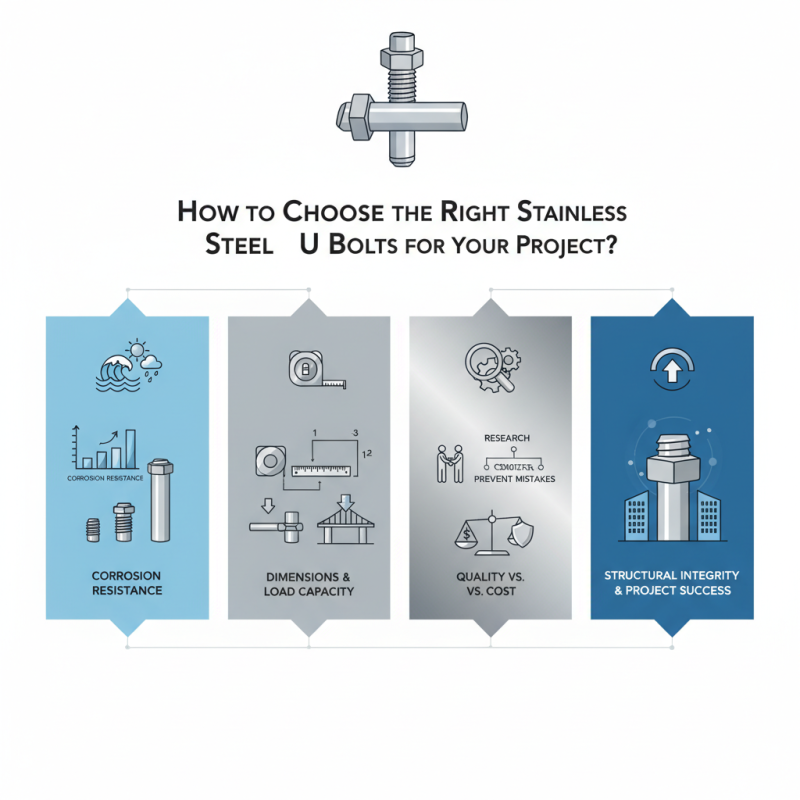
Choosing the right stainless steel U bolts for your project is crucial. These fasteners play a significant role in ensuring structural integrity. Their strength and durability make them ideal for various applications, from construction to marine uses. Understanding the specifications is key.
When selecting stainless steel U bolts, consider the environment where they will be used. Different grades of stainless steel offer varying levels of corrosion resistance. Projects exposed to harsh elements require higher-grade materials. It's essential to weigh these factors carefully.
While making your choice, think about the dimensions and load capacities of the U bolts. Miscalculations can lead to serious issues. Taking the time to research and consult with experts can help prevent costly mistakes. Finding the right balance between quality and cost is often challenging. Ultimately, the success of your project may depend on these seemingly small components.
Understanding Stainless Steel U Bolts and Their Applications
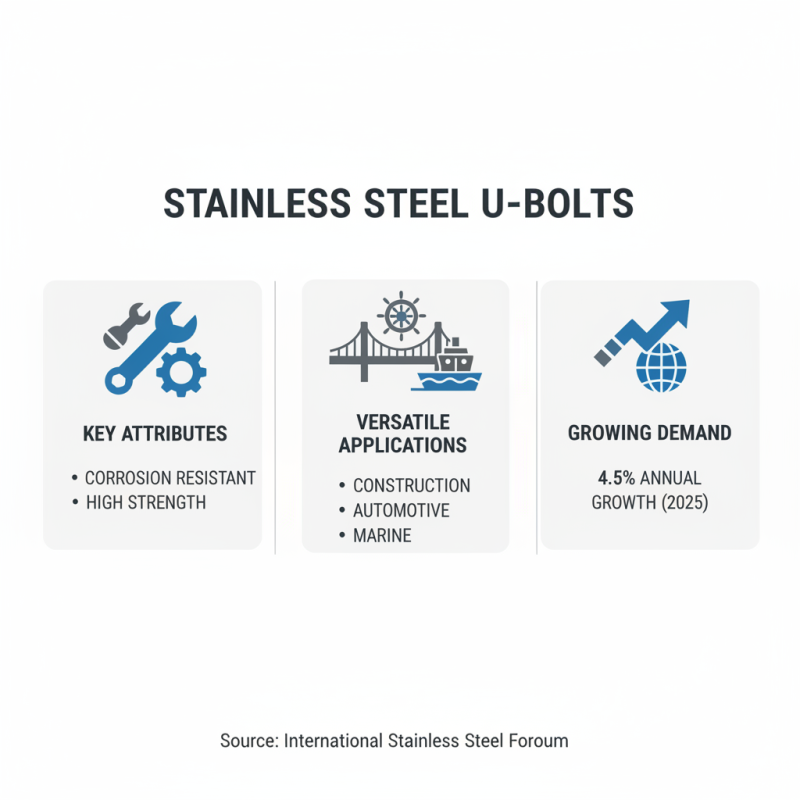
Stainless steel U bolts are crucial in many industries. They provide solid fastening solutions for various applications, including construction, automotive, and marine projects. Their corrosion resistance and strength make them ideal for outdoor and harsh environments. According to a recent report by the International Stainless Steel Forum, the global demand for stainless steel fasteners, including U bolts, is expected to grow by 4.5% annually through 2025. This clearly shows their importance in modern engineering.
When choosing stainless steel U bolts, consider the environment. Type 304 stainless steel is versatile for general use, and Type 316 offers heightened resistance to chlorides and acids. Also, check the diameter and length specifications to ensure a proper fit for your project. The American Society for Testing and Materials (ASTM) provides standard sizes and grades, which can guide your selection.
Tips: Always verify the grade before purchase. A mismatch can lead to failure. Additionally, inspect for any imperfections like rust or pitting. These might affect performance, especially in critical applications. Keep records of your U bolt specifications for future reference. Reliable documentation is key in construction projects.
Key Factors to Consider When Selecting Stainless Steel U Bolts
Selecting the right stainless steel U bolts is crucial for your project’s success. Start by considering the type of steel. Various grades exist, with 304 and 316 being popular. Grade 316 offers better corrosion resistance, making it ideal for marine and coastal applications. A thoughtful choice here can prevent premature failure.
Next, assess the size and diameter of the U bolts. They must fit snugly in your project without being overly tight. Consider the specific application as well. In structural and support uses, strength and load-bearing capacity are paramount. Ensure your U bolts can handle the pressure they will face.
Material thickness also plays a vital role. Thicker bolts can provide more strength but may be harder to work with. Weigh these factors carefully. Reflect on the environment. A U bolt that works well in one situation may not be suitable in another. Take the time to examine your needs thoroughly for the best results.
How to Choose the Right Stainless Steel U Bolts for Your Project?
| Dimension |
Material Grade |
Coating |
Load Capacity (lbs) |
Application |
| 2" x 3/8" |
AISI 304 |
None |
800 |
General Use |
| 3" x 1/2" |
AISI 316 |
Coated |
1200 |
Marine Applications |
| 4" x 5/8" |
AISI 2205 |
Galvanized |
1500 |
Structural Installations |
| 5" x 3/4" |
AISI 304 |
None |
1600 |
Heavy-Duty Applications |
Different Types of Stainless Steel Alloys Used in U Bolts
When selecting the right stainless steel U bolts, understanding the types of stainless steel alloys is crucial. There are various grades, each designed for specific conditions and applications. Commonly used alloys include 304 and 316 stainless steel.
The 304 stainless steel alloy is known for its excellent corrosion resistance. It is suitable for general-purpose applications, especially indoors or in mild environments. However, in extreme conditions, such as coastal areas, its performance may not be sufficient. On the other hand, 316 stainless steel offers superior resistance to saltwater and chemicals. It is ideal for marine and industrial applications but can be more expensive.
Each type of stainless steel has its strengths and weaknesses. While 304 might be acceptable for kitchen fixtures, it may not hold up well in harsher environments. Choosing the right alloy requires careful consideration of the environment and intended use. Remember, the wrong choice could lead to premature failure. Always weigh the long-term impacts.
Stainless Steel U Bolts: Alloy Types and Their Properties
Sizing and Thread Specifications for Proper Fit
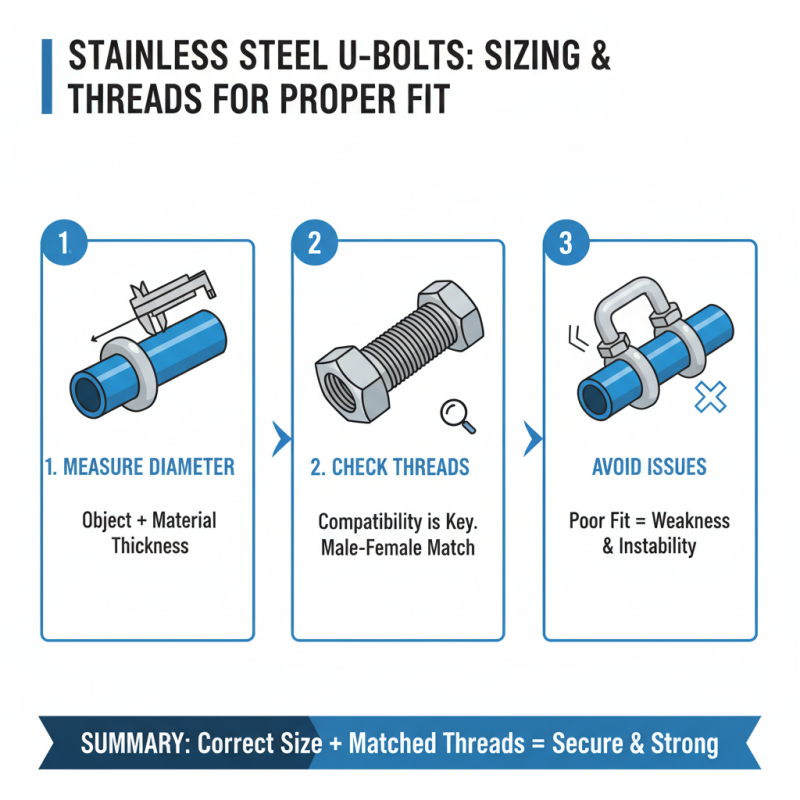
Choosing the correct stainless steel U bolts requires attention to sizing and thread specifications. Proper sizing is crucial for stability and performance in your project. Measure the diameter of the object where the U bolt will be fitted. Ensure that the measurements include any thickness of material being secured. Inadequate sizing can lead to poor fit and compromised strength.
Thread specifications also play a vital role. Various projects may require different thread styles, such as coarse or fine threads. Consider the load and material types. Coarse threads provide better grip under load, while fine threads allow for more precise adjustments. It's essential to know the threading system, whether it is UNC or UNF, to avoid compatibility issues. The thread length should match the total thickness of what is being clamped.
Attention to detail is key. An incorrect size or thread type can lead to failures in critical applications. Some may overlook the importance of these specifications, thinking any U bolt will suffice. However, such assumptions can lead to costly mistakes. Always double-check your requirements and, if necessary, consult with experts in the field to ensure a robust and reliable outcome.
Maintenance Tips for Ensuring Longevity of U Bolts in Projects
When using stainless steel U bolts in projects, maintenance is key to ensuring their longevity. Regular inspection is crucial. Check for signs of wear or rust. Even stainless steel can corrode under certain conditions. Keeping a close eye can save time and money later.
Cleaning U bolts with mild detergent and water is a simple yet effective method. Avoid abrasive cleaners that can scratch the surface. A soft cloth or sponge works best. After cleaning, rinse thoroughly to remove any soap residue. This step helps maintain the steel’s integrity and appearance.
Proper installation also plays a vital role in longevity. Ensure that U bolts are tightened to the appropriate specifications. Over-tightening can lead to metal fatigue and cracks. Conversely, under-tightened bolts can lead to structural failures. Regularly revisit installation settings. This proactive approach can help avoid costly repairs in the future.