How to Choose the Best Stainless Chain for Your Needs?
Choosing the right stainless chain is crucial for various applications. The stainless chain industry has seen a significant growth trend, with a projected market increase of 5.2% annually. This is driven by rising demand in construction and marine sectors. According to industry expert David Johnson, “Selecting the right stainless chain can make or break a project.”
Each type of stainless chain offers unique properties. For instance, 316 stainless steel chains are more resistant to corrosion than their 304 counterparts. Yet, choosing the wrong type often leads to unnecessary costs and project delays. The fine balance between quality and price makes decision-making more challenging.
Many factors determine the best chain for specific needs. Load specifications, environmental conditions, and durability are paramount. This complexity often overwhelms buyers. Moreover, improper assessments can lead to failures. Always consider expert insights and industry reports before making a selection. Reflecting on the overall requirements can guide you in finding the perfect stainless chain for your task.
Understanding the Different Types of Stainless Chains Available
When choosing a stainless chain, understanding the types available is crucial. There are several categories of stainless chains. Each type serves different purposes. For instance, Grade 304 stainless steel offers good corrosion resistance. It is widely used in marine applications. On the other hand, Grade 316 is better suited for harsher environments. It contains molybdenum, enhancing its resistance to chloride corrosion. A study showed that 316 chains last 30% longer in saltwater than 304 chains.
**Tip:** Consider your environment. Will the chain be exposed to saltwater or chemicals? If yes, opt for Grade 316 for added durability.
You should also analyze the chain's design. There are link chains, roller chains, and more. Each serves unique applications in various fields, from lifting to securing. For example, roller chains are commonly used in machinery. They provide efficient power transmission. However, improper sizing can lead to premature wear. Inadequate fitting might cause failure in critical applications.
**Tip:** Always double-check size and load requirements. Choose a chain that meets or exceeds your needs.
Be aware that stainless chains require regular maintenance. They resist rust but are not completely immune. Dirt and debris can still weaken links over time. A study indicated that neglected chains can lose up to 20% of their strength. Regular cleaning and lubrication are key. Skipping maintenance might lead to costly failures.
How to Choose the Best Stainless Chain for Your Needs?
| Chain Type |
Material Grade |
Corrosion Resistance |
Load Capacity |
Common Applications |
| Stainless Steel Ball Chain |
304 |
Good |
110 lbs |
Pet Leashes, Keychains |
| Stainless Steel Link Chain |
316 |
Excellent |
2000 lbs |
Marine Applications, Hoisting |
| Stainless Steel Welded Chain |
304 |
Good |
1500 lbs |
Construction, Agriculture |
| Stainless Steel Cargo Chain |
316 |
Excellent |
3000 lbs |
Lifting, Freight Transport |
Key Factors to Consider When Choosing a Stainless Chain
When choosing a stainless chain, consider the material quality. Different grades of stainless steel affect durability. For example, 304 and 316 grades are popular. The latter has better corrosion resistance, making it a good choice for marine environments. Think about where you will use it. High humidity or saltwater locations may require that extra protection.
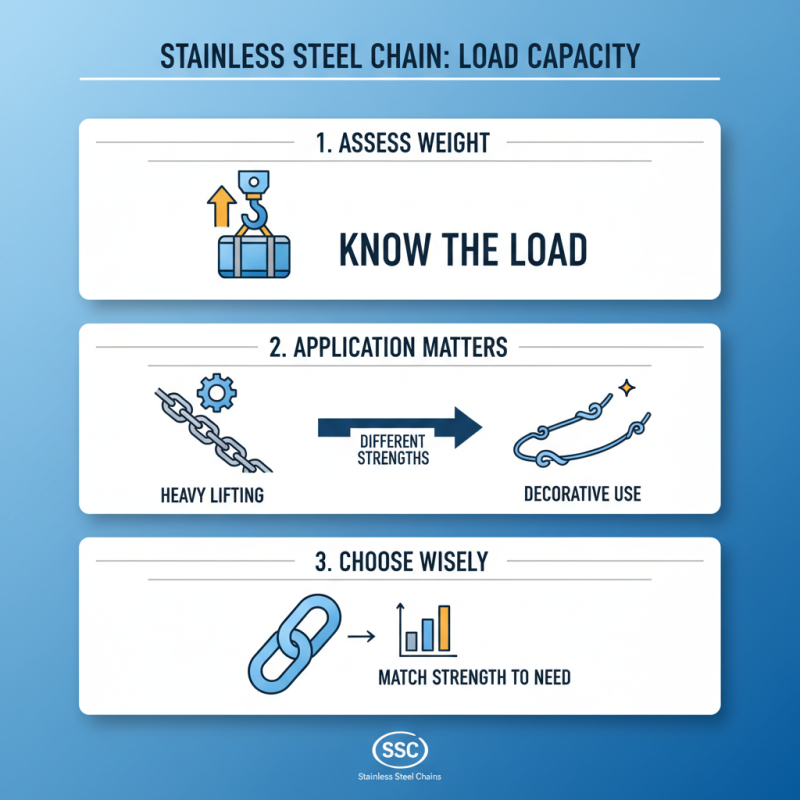
Next, assess the chain's load capacity. Each chain has a specific strength rating. Be mindful of the weight you plan to carry. Using a chain that can’t handle the load can lead to failure. It’s also crucial to think about the chain link design. Some designs offer better flexibility while others provide sturdiness. Consider your specific application needs.
Moreover, always examine the chain length you need. Buying too long can lead to wastage. Too short and you might face functionality issues. Inspect the connectors as well. A secure connection ensures safety. Not every chain fits all applications perfectly; you might need to try different options before finding the best fit. Careful evaluation prevents future problems.
Evaluating Load Capacity and Strength Requirements
When selecting a stainless chain, understanding load capacity is crucial. You need to know the weight the chain will bear. Different applications require different strengths. For instance, a heavy-duty lifting chain must support significant loads, while a decorative chain may only need to look good.
Assessing the strength requirements involves more than just looking at numbers. Consider factors like the environment and usage frequency. Will the chain face rust or extreme temperatures? These details matter. Testing chains under real conditions can reveal weaknesses. Mismatches between application and chain type often lead to failures.
It’s also important to think about safety. Overestimating the load capacity can lead to accidents. Chains should be marked with their ratings, but the ratings may not reflect real-world scenarios. Relying solely on specifications without hands-on evaluation can be misguided. Reflecting on past choices might reveal patterns you wish to change. Explore options, ask for expert advice, and remember that sometimes, trial and error holds the best lessons.
Assessing Corrosion Resistance and Environmental Factors
When choosing a stainless chain, understanding corrosion resistance is vital. Different environmental factors affect the chain's durability. For instance, saltwater exposure can accelerate corrosion. If you plan to use the chain near water, opt for materials specifically designed for marine environments. These options resist rust better than standard stainless steel.
Moreover, consider humidity levels in your region. High humidity can lead to quicker deterioration. Ensure the chain's surface finish is smooooth. Rougher finishes tend to trap moisture, increasing the risk of corrosion. Verify the chain's grade as well. Higher grades often offer better protection. However, they can be more expensive.
Be aware of potential trade-offs. For instance, a chain that is highly corrosion-resistant might be less flexible. This could limit its uses. Regular maintenance is also necessary. Inspect the chain for signs of wear. Small issues can escalate if left unchecked. Understanding these factors will help you make an informed decision.
Selecting the Right Chain Size and Accessories for Your Needs
Choosing the right chain size and accessories for your needs can be tricky. It’s essential to consider the specifications of your project. The chain size should match the requirements of your application. For instance, the width of the links affects the load capacity. A chain that is too small might break under pressure.
One key tip is to measure the load you expect to be working with. Check the manufacturer's guidelines for appropriate sizes. Sometimes, people overlook the importance of accessories too. Quality accessories can enhance safety and durability. Swivels, hooks, and connectors should all be compatible with your chain.
Another aspect to think about is the environment. If your chain is exposed to the elements, choose materials resistant to corrosion. Not thinking through the environment can lead to costly mistakes. Keep these factors in mind while selecting. Always double-check your choices. It’s better to take extra time than to rush and regret later.