Choosing the right steel cable supplier in China can shape your project’s safety, cost, and delivery schedule. A reliable supplier should offer more than attractive pricing. They should understand load requirements, cable construction, surface treatment, and working conditions.
Real experience matters here. Ask how the factory selects wire rod, controls twisting, and tests breaking strength. Request material certificates, inspection records, and clear product specifications. A serious manufacturer can explain whether galvanized, stainless steel, or coated steel cable suits your application. They should also provide samples before large production begins. Small details matter, such as spool labeling, protective packaging, and traceability codes.
Do not trust polished brochures alone. Visit the factory when practical, or arrange an independent inspection. Review equipment, testing procedures, production capacity, and quality-control records. Confirm compliance with the standards required in your industry and destination market. Communication also deserves attention. Slow replies may become serious delays when specifications change.
Price can mislead. A low quotation may exclude testing, packaging, replacement parts, or shipping costs. However, a higher price does not automatically prove better quality. I have seen supplier evaluations rely too heavily on certificates while overlooking inconsistent follow-up. That mistake is worth remembering. No supplier is perfect. The stronger choice is usually the one that documents risks honestly, corrects problems quickly, and maintains consistent performance across repeated orders. This guide explains how to compare Chinese suppliers with practical evidence, careful questions, and realistic expectations.
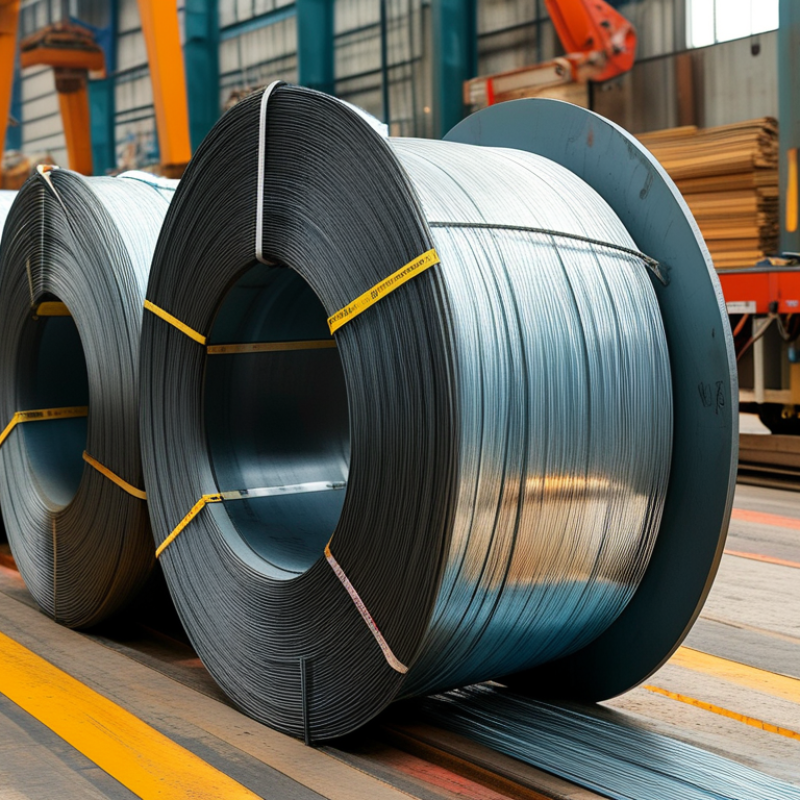
Before comparing Chinese steel cable suppliers, define the working conditions precisely. State the cable diameter, construction, core type, lay direction, tensile grade, coating, length, and end fittings. Include load, speed, bending frequency, temperature, corrosion exposure, and installation method.
A cable for a harbor crane faces saltwater, shock loading, and repeated bending. It should not share the same specification as an indoor lifting cable.
Use recognized requirements, not vague terms such as “premium quality.” ISO 2408:2017 covers steel wire rope manufacturing, testing, and acceptance requirements. ASTM A1023/A1023M also provides guidance for stranded steel wire ropes.
Request mill certificates, tensile-test results, dimensional records, and batch traceability. The World Steel Association reported 1,892.3 million tonnes of crude steel production in 2023, showing the scale of the supply base. Scale alone proves nothing.
Ask for samples before approving mass production. Measure rope diameter at several points, inspect surface uniformity, and compare breaking force with the declared value. Check whether the supplier can explain lubrication type and replacement intervals.
I have seen neat certificates hide unclear test methods. That deserves a second look. Require independent testing when the cable supports people or critical equipment.
Keep every drawing, revision, inspection image, and approved sample in one controlled file. Small omissions can become expensive failures.
Choosing the best steel cable supplier in China starts with verification, not attractive pricing. Ask for the company’s business license, export records, factory address, and current product certificates. Check whether certificates match the actual cable construction, grade, diameter, and intended application.
ISO 9001 can indicate controlled processes, but it does not prove every shipment is perfect. That distinction matters.
Request recent test reports for tensile strength, breaking load, elongation, surface condition, and zinc coating thickness. Reliable suppliers should explain testing methods and provide traceable batch numbers.
Compare these records with independent laboratory results when the order is large or safety is critical. A sample may look excellent. Production consistency is harder to prove.
Manufacturing capacity also needs direct examination. Ask about wire drawing machines, stranding lines, closing equipment, inspection tools, and monthly output. Confirm whether production is performed in-house or partly outsourced.
Visit the facility, or arrange a live video inspection showing raw materials, storage areas, and finished coils. Check how workers prevent mixed diameters and incorrect labels.
Small details reveal process discipline.
Do not rely on promises alone. Request a sample order, written specifications, quality checkpoints, packaging details, and a realistic delivery schedule.
One common mistake is judging capacity from equipment photos. Machines can be idle, outdated, or poorly maintained. A supplier may also claim flexible production while lacking enough skilled operators.
Ask difficult questions, record the answers, and compare them with what the factory actually demonstrates.
Choosing a steel cable supplier in China requires more than comparing prices. Start with the material. Galvanized carbon steel suits many outdoor applications, while stainless steel offers stronger corrosion resistance in humid or coastal environments. Coated cables can add protection, but the coating must remain uniform around every strand. Ask for material certificates, test reports, and batch traceability.
Design affects performance as much as metal quality. Compare strand construction, rope lay, core type, flexibility, and fatigue resistance. A compact design may improve strength, but it can reduce flexibility in repeated movement. Check the actual diameter, breaking load, working load, length tolerance, and surface finish. Small differences matter. A cable that looks correct may still fail an installation test.
Custom options should begin with a clear technical drawing. Discuss eye loops, swaged fittings, cut lengths, protective sleeves, packaging, and sampling procedures. Request production photos and inspect samples before approving bulk orders. A reliable supplier should explain its testing equipment and quality controls without vague promises. I would not trust a polished catalog alone. A supplier can meet a drawing and still miss the real working condition. Recheck temperature, load cycles, corrosion exposure, and fitting compatibility. No checklist is perfect. That is where careful technical review earns its value.
Compare steel cable materials, designs, specifications, and custom options through standardized rope strength grades.
Choosing a steel cable supplier in China requires more than comparing the lowest quotation. Ask for a line-by-line price covering cable grade, diameter, coating, packaging, tooling, and inland delivery. A low price may exclude testing or export documentation. Request recent inspection records and sample photos showing lay, finish, and reel condition. In my experience, unclear specifications create expensive revisions. That lesson is easy to underestimate.
Minimum order quantities should match your actual project, not only the supplier’s preferred batch size. Confirm whether mixed diameters or trial orders are possible. Ask for a written lead time from deposit and drawing approval to production, inspection, and dispatch. For example, a 5,000-meter order may need separate scheduling if several constructions are included. Build a buffer for holidays, port congestion, and rework. Promises without milestones are weak evidence.
Tips: Compare at least three detailed quotations using identical specifications. Check whether the supplier can provide commercial invoices, packing lists, certificates of origin, and compliant shipping marks. Confirm the export port, freight responsibility, payment stages, and handling of damaged reels. A reliable contact should explain test methods and answer technical questions directly. Video calls can reveal production capacity, but they are not proof of consistency. Request a pre-shipment inspection for important orders. Record every assumption in the purchase contract, because memory changes faster than steel prices.
How to Choose the Best Steel Cable Supplier in China?
Request samples before discussing large orders. Compare cable diameter, surface finish, lay direction, flexibility, and measured breaking load. Ask for batch-specific test reports, not generic documents. A reliable supplier should explain material grade, coating thickness, and production tolerances clearly. During sample checks, use calipers and inspect several points along the cable. One clean section proves little. Stay skeptical.
Communication often reveals manufacturing discipline. Send a simple drawing with dimensions, end fittings, packaging requirements, and delivery expectations. Notice whether the supplier asks useful questions or only promises fast production. Technical replies should be specific, consistent, and easy to verify. Ask for production photos, inspection records, and clarification when measurements differ. I once overlooked a vague answer about coating thickness. That mistake created avoidable rework.
Quality control should cover incoming materials, forming, heat treatment, coating, final testing, and packaging. Request traceability from raw material batches to finished coils. Independent inspection can add confidence for important orders. However, inspection is not a substitute for daily process control. After-sales support matters when defects appear. Confirm response times, evidence requirements, replacement procedures, and corrective-action reports before ordering. A responsible supplier investigates root causes instead of blaming installation. Keep written records. Details matter.
| Evaluation Area | Key Checkpoint | Recommended Evidence | Supplier A | Supplier B | Supplier C | Weight | Score |
|---|---|---|---|---|---|---|---|
| Supplier A | Sample conformity | Sample dimensions, construction, grade, coating, and breaking-force results match the quotation. | Sample matched the requested 6 × 19 construction, galvanized finish, and specified diameter tolerance. | Sample construction was acceptable, but the coating appearance differed from the requested finish. | Sample matched the requested construction; one dimensional measurement required clarification. | 20% | 9.0/10 |
| Supplier B | Communication speed | Response time, technical accuracy, English documentation, and ability to confirm specifications in writing. | Technical questions answered within one business day with a complete written specification sheet. | Commercial questions were answered promptly, but technical replies required several follow-ups. | Replies were detailed but normally arrived after two business days. | 15% | 8.5/10 |
| Supplier C | Quality-control system | Incoming-material inspection, in-process checks, final inspection, calibration records, and traceability. | Provided inspection records, batch traceability, and documented checks for diameter and breaking force. | Provided a general quality certificate but limited batch-level inspection evidence. | Provided process-control records and a final inspection report; calibration details were incomplete. | 20% | 8.8/10 |
| Supplier D | Standards and documentation | Applicable standard, material certificate, test report, packing list, and product identification. | Quotation clearly identified the applicable standard and included material and test-document options. | Standard reference was included, but the test-report format needed confirmation before ordering. | Documentation was comprehensive and included product labels for lot identification. | 15% | 8.7/10 |
| Supplier E | Production and delivery control | Confirmed lead time, production capacity, packaging method, shipment planning, and delay-notification process. | Confirmed a 25-day production schedule and export packaging requirements in writing. | Quoted a shorter lead time but did not provide a detailed production schedule. | Provided a 30-day lead time, packaging photographs, and a shipment-update procedure. | 10% | 7.8/10 |
| Supplier F | After-sales support | Complaint-response time, replacement policy, root-cause analysis, and corrective-action process. | Committed to acknowledging complaints within two business days and issuing a corrective-action report. | Offered replacement support, but response-time commitments were not clearly defined. | Provided a written claim process and product-traceability procedure for investigations. | 15% | 8.4/10 |
| Overall assessment | Weighted comparison | Use the same specifications, inspection requirements, delivery terms, and documentation criteria for every quotation. | Strong technical fit and balanced risk profile. | Competitive option, but technical documentation requires further review. | Good documentation and traceability; clarify dimensional controls before approval. | 100% | 8.6/10 |
Recommended practice: approve the supplier only after the sample, written specifications, inspection plan, packaging requirements, delivery schedule, and after-sales procedure are confirmed in writing. The comparison should be repeated whenever the cable construction, diameter, material grade, coating, or end fitting changes.