2026 How to Choose the Best Acid Storage Cabinets?

Choosing the right Acid Storage Cabinets in 2026 is not just a matter of finding a box that fits beneath a workbench. The cabinet must suit the acids being stored, the room, and the people who use it. A container that looks sturdy may still be poorly matched to a corrosive liquid. Small details matter: door clearance, shelf shape, compatible lining, and a clear label at eye level.

The physician and toxicology pioneer Paracelsus is often credited with the phrase, “The dose makes the poison.” His observation is not a cabinet specification, but it offers a useful safety reminder: risk depends on the substance and the conditions around it. For acid storage, that means checking chemical compatibility, capacity, ventilation needs, and the manufacturer’s installation guidance. Keep incompatible materials separate. Make labels easy to read. Leave enough space to inspect containers without moving everything around.

There is no universal best cabinet. A compact unit may suit a teaching lab, while a busy testing room may need greater capacity and more frequent inspection. Start with the acids actually on site, not a generic product checklist. Compare construction materials, spill containment, hardware, and service support. Then confirm the choice with a qualified safety professional and the product documentation. It takes a little longer. That pause can prevent an expensive mismatch.

Cabinets help manage risk; they do not remove it. Real rooms are messy, and procedures can drift. Revisit the setup when chemicals, staff, or workflows change.
2026 How to Choose the Best Acid Storage Cabinets?

What Acid Storage Cabinets Are and How They Protect Hazardous Materials

2026 How to Choose the Best Acid Storage Cabinets?

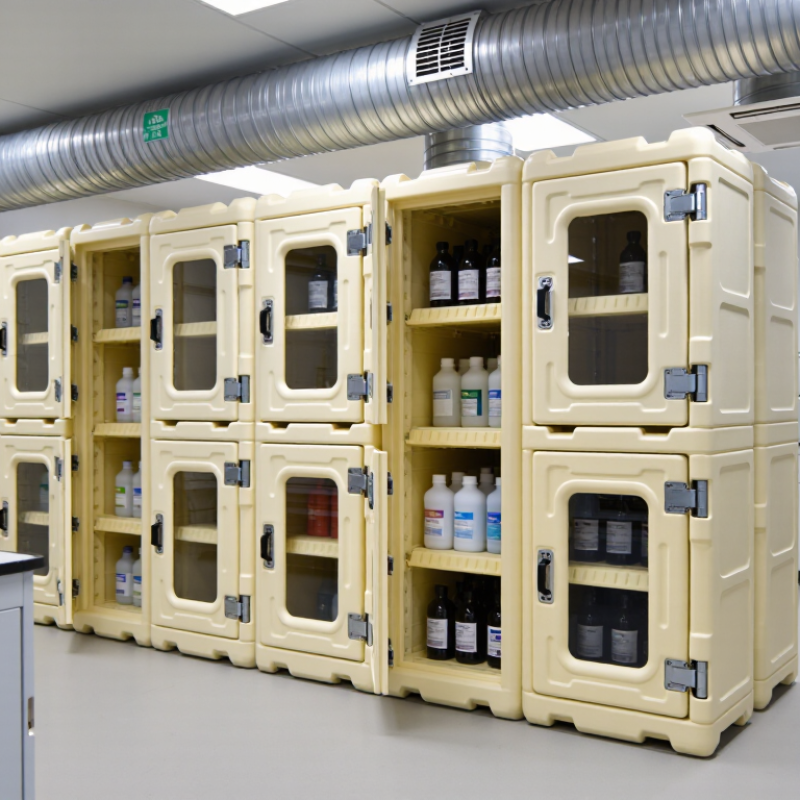
An acid storage cabinet is a dedicated enclosure for keeping corrosive liquids contained and separated from incompatible materials. Its corrosion-resistant interior and leak-catching sump help limit damage if a bottle drips or breaks. The cabinet also keeps containers upright and clearly grouped, rather than scattered across a workbench. Small details matter.

Construction must suit the acids being stored. Check the safety data sheet and confirm that shelves, liners, seals, and the sump are compatible with each chemical. “Acid-resistant” is not a universal guarantee: different acids can affect materials in different ways. A cabinet can look robust and still be unsuitable for one bottle.

Good storage also depends on how the cabinet is used. Keep acids away from bases and other incompatible chemicals, and follow your site’s procedures for ventilation, labeling, and maximum load. Leave containers closed, upright, and easy to inspect. Check the sump and cabinet surfaces for residue, corrosion, or damage during routine inspections. If a container leaks, stop and follow the facility’s spill-response procedure rather than improvising. No cabinet replaces careful handling.

A little uncertainty is worth admitting: storage needs can change as chemicals, quantities, or room conditions change, so review the setup regularly.
How to Identify Acid Types, Concentrations, and Storage Risks

Choosing an acid cabinet starts with the exact chemical name, not the word “acid.” Check the safety data sheet for concentration, hazards, and compatibility. A 30% solution may behave differently from a concentrated product. Note whether the liquid fumes, oxidizes, or reacts with metals. Keep original labels visible, and record opening dates where required. Small details matter.

The NIOSH Pocket Guide to Chemical Hazards lists hydrogen chloride’s IDLH value as 50 ppm and sulfuric acid’s as 15 mg/m³. IDLH means immediately dangerous to life or health; these figures describe exposure danger, not safe storage limits. Nitric acid also has oxidizing properties, so it should not share space with incompatible materials. Check each product’s SDS rather than relying on a generic “corrosive” label.

Match cabinet construction and spill containment to the chemicals and concentrations stored. Verify that shelves and liners resist the specific acid, then separate incompatible products using the SDS guidance. Keep containers upright, closed, and within practical reach; avoid overcrowding that could hide leaks. A cabinet rating alone does not prove compatibility. This is easy to overlook. Review the inventory when products change, and ask a qualified safety professional when the SDS or cabinet instructions leave doubt.

Which Cabinet Materials and Safety Features Suit Each Acid

2026 How to Choose the Best Acid Storage Cabinets?

Acid compatibility matters more than appearance. A cabinet that resists one acid may fail with another. For many corrosives, polyethylene or polypropylene interiors and spill trays can help limit damage from drips. Still, concentrated sulfuric acid can generate heat when diluted, and compatibility depends on concentration and temperature. Check the safety data sheet and a chemical-compatibility chart before choosing materials.

Nitric acid is an oxidizer, so it needs compatible storage away from organic materials and other incompatible chemicals. Hydrofluoric acid attacks glass; choose suitable plastic containers and cabinet components instead. Not every plastic performs equally well. A corrosion-resistant metal cabinet may suit some setups, but inspect seams, hinges, and coatings for vulnerable spots. Small details matter.

Look for a raised lip or removable tray that can contain a leak, plus secure doors and clear chemical labels. Keep containers upright, capped, and easy to inspect. Leave enough room to lift bottles without scraping them against shelves. Venting is not automatically safer; follow the chemical guidance and cabinet instructions, since unsuitable ducting can corrode. There is no perfect cabinet for every acid. I would rather verify compatibility twice than trust a broad “acid resistant” label.

2026 How to Choose the Best Acid Storage Cabinets? - Which Cabinet Materials and Safety Features Suit Each Acid
Acid or Acid Group Cabinet Material to Consider Useful Safety Features Compatibility and Storage Notes
Hydrochloric acid Corrosion-resistant polyethylene (PE) or polypropylene (PP) Leak-resistant sump, corrosion-resistant shelves, secure doors, and clearly labeled acid-only storage Hydrochloric acid fumes can corrode nearby metals. Avoid relying on unprotected steel or stainless steel as the exposed storage surface; verify the cabinet and tray against the acid concentration.
Sulfuric acid PE or PP may be suitable for many ambient-temperature applications; confirm compatibility for the specific concentration Strong, stable shelves; a compatible spill tray; and secondary containment sized for the stored containers Concentrated sulfuric acid can behave differently from dilute solutions and generates substantial heat when mixed with water. Store away from water-reactive materials and follow the product SDS.
Nitric acid A dedicated cabinet and secondary containment with materials confirmed compatible with the acid concentration Oxidizer identification, physical segregation from organic or combustible materials, and leak-resistant containment Nitric acid is a strong oxidizer. Do not assume a general-purpose plastic acid cabinet is suitable; check documented compatibility and applicable local requirements before selection.
Hydrofluoric acid Compatible PE or PP cabinet surfaces and containment, selected for the exact concentration Dedicated, clearly identified storage; secure compatible containers; and secondary containment resistant to HF Hydrofluoric acid attacks glass. Do not use glass shelves, glass secondary containment, or glass storage containers unless specifically approved for the product and application.
Acetic acid, including glacial acetic acid Material selected for both corrosivity and, where relevant, flammability; verify compatibility with the concentration Separate storage from oxidizers, compatible spill containment, and appropriate hazard labeling Glacial acetic acid is combustible as well as corrosive. Determine cabinet requirements from its SDS and local fire and chemical-storage rules; do not store it with nitric or other incompatible oxidizing acids.
Perchloric acid Dedicated storage arrangement specified by institutional procedures and applicable regulations; do not assume ordinary cabinet materials are suitable Dedicated, segregated storage; compatible secondary containment; and clear oxidizer identification Perchloric acid is a powerful oxidizer. Obtain site-specific safety guidance before choosing a cabinet, and keep it separate from organic, combustible, and otherwise incompatible materials.

Selection reminder: No cabinet material is universally compatible with every acid. Confirm the exact acid, concentration, temperature, container type, and cabinet components against the manufacturer’s chemical-compatibility data and the product SDS. Store acids apart from bases and incompatible chemicals, and follow applicable workplace and fire-safety requirements.

How to Compare Capacity, Ventilation, and Regulatory Requirements

Compare acid cabinets by usable capacity, not advertised exterior dimensions. Measure each bottle, including its cap, and leave room for safe retrieval. Fit matters. A 30-gallon cabinet may still be unsuitable if its shelves cannot support the load or its containment sump cannot hold likely spills. The NFPA report Structure Fires in Educational Properties estimated 1,510 laboratory fires annually in the United States during 2014–2018. That figure is not acid-specific, but it underscores why storage layout and compatible materials deserve careful review.

Check each chemical’s safety data sheet before deciding on ventilation. Ducting is not automatically safer; it can affect cabinet performance and draw corrosive vapors through unsuitable ductwork. Keep incompatible acids apart, and use dedicated secondary containment where required by your risk assessment. OSHA’s Laboratory Standard, 29 CFR 1910.1450, calls for a Chemical Hygiene Plan that sets criteria for control measures. Use that plan alongside local fire and building codes, since requirements vary by location. Record the cabinet’s rated capacity, shelf limits, venting configuration, and inspection date. A detail is easy to miss: even a correctly rated cabinet can fail as a system when containers are overcrowded or stored with incompatible materials.

How to Inspect, Install, and Maintain an Acid Storage Cabinet

2026 How to Choose the Best Acid Storage Cabinets?

How to Inspect, Install, and Maintain an Acid Storage Cabinet

Before installation, inspect the cabinet’s seams, shelves, hinges, and latch for dents, corrosion, or loose parts. Check that its lining and construction suit the specific acids listed on their safety data sheets. Compatibility varies. Confirm the cabinet is level and stable, and follow the manufacturer’s instructions for anchoring and ventilation. A rushed check can miss a small defect; look closely at shelf corners and door edges.

Tips: Keep the cabinet away from heat and traffic. Store containers upright, clearly labeled, and with enough space to inspect them. Use compatible secondary containment where appropriate, and keep incompatible chemicals separated according to guidance.

During routine checks, look for leaks, residue, damaged labels, and doors that no longer close securely. Clean spills only using procedures and protective equipment specified by your site’s safety guidance. Do not improvise a cleaning method. Record inspections and repairs, even when nothing seems wrong; that record can reveal gradual changes. If corrosion, damage, or an unexplained odor appears, restrict access and consult your safety lead before returning the cabinet to service.