What Are Insulated Combination Pliers Used For?
Insulated Combination Pliers are designed for gripping, bending, twisting, and cutting wire while helping protect a worker from electrical contact. They are not ordinary pliers with a bright coating. Their insulation is a tested safety feature, and the tool’s voltage rating matters.
IEC 60900:2018 covers insulated tools intended for work on systems up to 1,000 volts AC and 1,500 volts DC. ASTM F1505 also sets requirements for insulated hand tools, including design and testing. These standards provide useful reference points; the U.S. Bureau of Labor Statistics’ Census of Fatal Occupational Injuries separately tracks electrocutions, underscoring why electrical hazards deserve careful attention. Standards do not make unsafe work safe. Test first.
In practice, combination pliers can help an electrician grip a conductor, shape a wire end, or make a cut, with insulated handles providing a protective barrier when used correctly. Check the voltage marking, inspect the insulation for cuts or cracks, and choose a tool suited to the task. A damaged handle is not a small detail. It may be hard to notice until the tool is needed.
I cannot verify a reliable, attributable quotation from a named specialist on this specific tool, so I will not invent one. That limitation matters: credible safety guidance should be traceable. The sections ahead explain what Insulated Combination Pliers are used for, what their ratings mean, and where their protection has limits.
What Insulated Combination Pliers Are and How They Are Designed
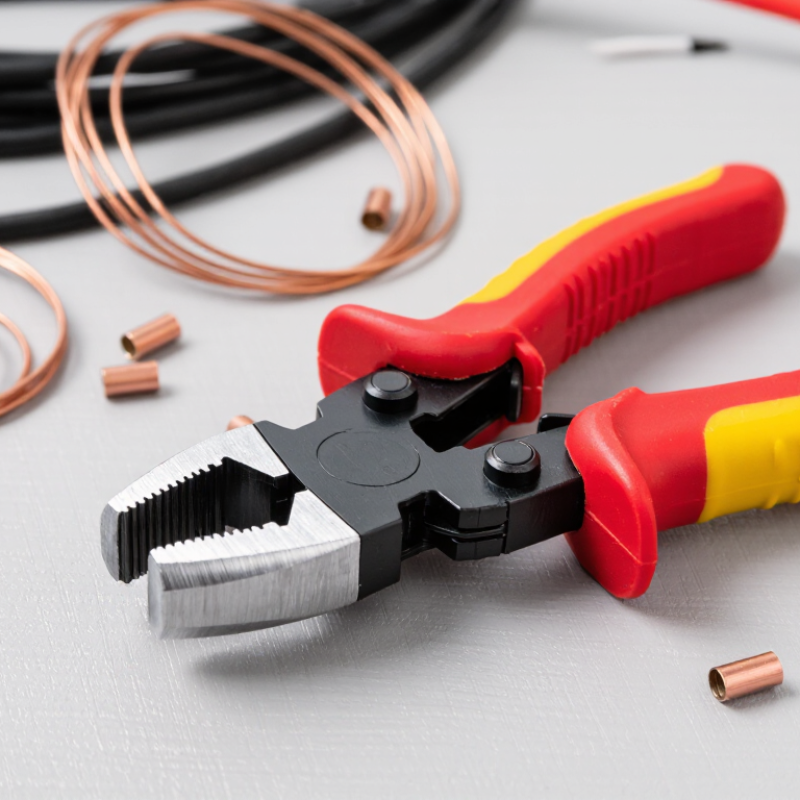
Insulated combination pliers bring several hand-tool functions together. Their jaws can grip, bend, and twist wire, while a cutting edge near the pivot trims it. The exact shape varies, but many designs have serrated inner faces for holding round or flat material. Their handles carry insulating material and usually include raised guards to help keep the hand from sliding toward the metal head. A firm, dry grip matters.
These pliers are designed for electrical tasks where contact with energized parts may be possible, but the insulation is not a reason to work carelessly. Properly rated tools are tested to a stated voltage level; ordinary pliers with soft plastic handles are not equivalent. Check the markings, and inspect the insulation for cuts, cracks, or looseness before use. Small defects count. A damaged coating can undermine protection, even when the jaws still work perfectly. De-energizing equipment remains the safer practice whenever possible, and insulated pliers do not replace training or other protective measures. One detail is easy to overlook: the cutting jaws may be sturdy, yet using them on material beyond their intended capacity can damage the tool.
What Are Insulated Combination Pliers Used For? - What Insulated Combination Pliers Are and How They Are Designed
| Use or Design Feature | How It Works | Typical Electrical-Work Application | Important Limitation |
| Gripping and holding | The shaped jaws provide gripping surfaces for holding small components and wire. | Positioning conductors or holding a component during installation and maintenance. | Use a tool with jaws suited to the material and task; avoid crushing or damaging conductors. |
| Bending wire | The jaws let the user form or adjust wire by applying controlled hand pressure. | Making bends in conductors when preparing connections or routing wire. | Follow the wire and equipment manufacturer’s guidance to avoid excessive bending or damage. |
| Cutting wire | Integrated cutting edges near the pivot are designed to cut suitable wire sizes and materials. | Trimming conductors during electrical installation or repair. | Check the tool’s rated cutting capacity. Do not use it to cut hardened materials unless the tool is specified for that purpose. |
| Insulated handles | Insulating handle coverings help reduce the risk of electric shock when used as intended and kept in good condition. | Electrical work where an appropriately rated insulated hand tool is required. | Handle insulation does not make work on energized equipment safe. De-energize, isolate, and verify circuits whenever possible. |
| Protective stops or guards | Raised sections near the handles can help keep the hand from sliding toward exposed metal parts. | Maintaining hand position while gripping, bending, or cutting. | Guards are not a substitute for correct handling, suitable protective equipment, or safe work procedures. |
| Insulation marking and rating | Compliant tools are marked to identify their insulation rating and applicable standard. | Selecting a tool for electrical tasks within its stated voltage rating. | Check markings, inspection condition, and applicable requirements before use; damaged insulation means the tool should be removed from service. |
Safety note: Insulated combination pliers combine gripping, bending, and cutting functions with insulating handle protection. Tools complying with IEC 60900 are intended for work on live parts at voltages up to 1,000 V AC and 1,500 V DC, subject to the standard and applicable workplace procedures. Always follow local electrical-safety rules and inspect the tool before use.
How Their Insulation Helps Reduce Electrical Shock Risk
What Are Insulated Combination Pliers Used For?
Insulated combination pliers grip, bend, and cut wire while helping reduce shock risk around electrical work. Their coated handles form a barrier between the user’s hands and conductive metal. That barrier can help if a hand slips toward a live component, but it does not make contact safe. The jaws remain conductive, and damaged, wet, or contaminated insulation can compromise protection. IEC 60900:2018 covers insulated hand tools intended for work up to 1,000 V AC or 1,500 V DC. Those ratings describe the tool standard, not permission to work on energized circuits. OSHA’s 29 CFR 1910.333 generally requires exposed live parts to be deenergized before work, with limited exceptions.
Tips: Check the voltage marking and inspect the coating before each use. Look closely for cuts, cracks, or exposed metal near the handles. Keep the tool dry, and use properly rated pliers only within their marked limits. Insulation helps. It is not a force field; honestly, that distinction is easy to forget when a repair seems small. Use insulated pliers alongside appropriate isolation procedures and protective equipment, not as a substitute for them.
Common Gripping, Bending, and Cutting Tasks
Insulated combination pliers handle everyday gripping, bending, and cutting tasks on electrical work. Their serrated jaws can hold a wire firmly while you shape a loop or guide a small component into place. The cutter near the pivot trims suitable copper conductors and soft ties. They are useful in a crowded junction box, where a fingertip cannot easily reach. But they are not universal cutters; hard wire can damage the edges.
Tips: Check the insulation for cracks, cuts, or contamination before use. Confirm the tool’s voltage rating and standard marking, such as IEC 60900, and use it only within its limits. Keep fingers behind the guards. Insulation does not make energized work automatically safe.
The risk deserves attention: the U.S. Bureau of Labor Statistics recorded 145 fatal work injuries involving exposure to electricity in 2022. That figure is a reminder, not a measure of plier performance. De-energize circuits whenever possible, and have qualified workers verify the absence of voltage before handling conductors. One detail often gets overlooked: a clean-looking tool can still be damaged at the jaw or hinge. Inspect it closely.
What Are Insulated Combination Pliers Used For?
Common gripping, bending, and cutting tasks
How to read this chart: Bars count example tasks listed for each function; they do not represent frequency or tool performance. Insulated pliers are intended for electrical work only within their marked voltage rating and when in good condition.
Where Insulated Combination Pliers Are Commonly Used
Where Insulated Combination Pliers Are Commonly Used
Insulated combination pliers are common in building maintenance, industrial plants, and electrical service work. Technicians use them to grip, bend, and cut conductors while fitting components inside control cabinets or equipment enclosures. Their shaped jaws can hold a wire steady as a terminal is positioned. The insulated handles add a protective layer, but they do not make energized work automatically safe.
They are useful on construction sites and during repairs to lighting, motors, and HVAC control systems, especially where several wire sizes need handling. IEC 60900 specifies requirements for insulated hand tools, including tools rated for work up to 1,000 volts AC. Workers should check the tool’s markings and inspect its coating before use. Small cuts matter. A nick or crack can undermine protection, even when the handle looks mostly intact.
The U.S. Bureau of Labor Statistics recorded 145 fatal work injuries involving exposure to electricity in its 2022 Census of Fatal Occupational Injuries. That figure is a reminder to de-energize circuits where possible and verify their status with suitable test equipment. Pliers are for controlled gripping and cutting, not a substitute for electrical isolation or task-specific protective equipment. In cramped panels, even a correctly rated tool can slip; that practical risk deserves attention.
How to Select and Inspect Them for Safe Work
What Are Insulated Combination Pliers Used For?
How to Select and Inspect Them for Safe Work
Insulated combination pliers grip, bend, and cut wire during electrical tasks. Select a pair marked with a clear voltage rating that suits the work. The handles should feel secure, with insulation covering the intended grip area. Check that the jaws meet evenly and move smoothly. A comfortable fit matters; stiff hinges can make control harder.
Before each use, look for cuts, cracks, peeling, discoloration, or exposed metal on the handles. Check the jaws and pivot for damage, too. Keep the tool clean and dry. If the insulation is damaged or the rating is unclear, remove the pliers from service. Don’t patch them with tape. Insulated handles do not make every electrical task safe, and they cannot prevent contact through exposed metal. Follow workplace procedures, use suitable protective equipment, and have electrical work performed only by qualified people. Small defects are easy to miss.
Tips: Wipe the handles before inspection. Rotate the pliers under good light, and check near the jaw base. If anything feels loose or looks questionable, choose another tool. I still pause over tiny nicks; that extra check is worth the moment.