What Is Stainless Steel Hardware and What Types Are There?

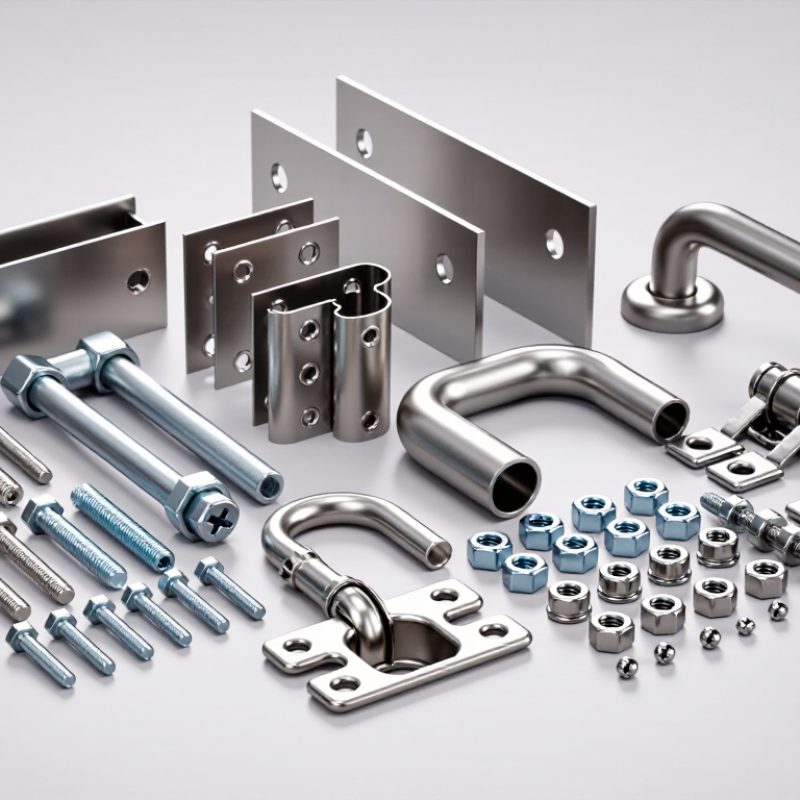
Stainless steel hardware appears in homes, factories, boats, hospitals, and outdoor structures. It includes fasteners, hinges, brackets, handles, clamps, hooks, and architectural fittings. These small components often carry serious responsibility. A loose screw can weaken a railing. A poorly selected hinge can corrode behind a clean-looking door.

Metallurgist Harry Brearley, widely associated with the development of stainless steel, once wrote, “I am credited with inventing stainless steel, but that is not true.” His humility matters. Material performance depends on chemistry, manufacturing, surface treatment, and working conditions. The label alone proves very little.

This guide explains what stainless steel hardware is and how its main types differ. Common grades include 304, 316, and 430. Grade 304 suits many indoor and general outdoor applications. Grade 316 contains molybdenum, making it more suitable for salt air, coastal sites, and chloride exposure. Grade 430 can offer useful value indoors, but it usually provides less corrosion resistance than 304 or 316.

The finish also matters. Brushed surfaces hide fingerprints, while polished surfaces reflect more light. Passivation can improve surface protection after machining. Still, stainless steel is not invincible. Contact with carbon steel, trapped moisture, cement dust, or harsh chemicals may create stains or premature corrosion.

Choosing the correct stainless steel hardware requires more than comparing prices. Load, temperature, humidity, cleaning chemicals, and installation methods all deserve attention. Some recommendations may seem obvious, yet real failures often begin with overlooked details. That is why this article examines each hardware type through practical use, material selection, and long-term reliability.
What Is Stainless Steel Hardware and What Types Are There?

Definition and Key Properties of Stainless Steel Hardware

Stainless steel hardware refers to fastening and support components made from corrosion-resistant steel alloys. It includes screws, bolts, nuts, washers, hinges, brackets, and cable fittings. Most stainless steel contains at least 10.5% chromium. Chromium forms a thin passive layer on the surface. This layer helps protect the metal from moisture and oxidation. It is not rust-proof. Salt, chemicals, and trapped water can still cause staining or corrosion. In practical installation work, clean surfaces and proper drainage often matter as much as the material itself.

Key properties include corrosion resistance, strength, durability, and low maintenance. Stainless steel also tolerates temperature changes better than many ordinary steels. Grade 304 suits general indoor use, kitchens, and sheltered outdoor areas. Grade 316 offers stronger resistance to saltwater and chemical exposure. However, grade selection alone cannot guarantee performance. Surface finish, contact with other metals, and installation quality also influence service life. Details matter. A polished surface may be easier to clean, while a rough surface can hold dirt and moisture.

Common hardware types serve different mechanical purposes. Bolts and nuts create removable joints, while screws fasten materials directly. Washers spread pressure and reduce surface damage. Hinges support repeated movement, and brackets carry or stabilize loads. In outdoor work, avoid placing stainless steel directly against incompatible metals without suitable separation. Galvanic corrosion is a frequent oversight. Overtightening can also damage threads or deform thin panels. I have seen reliable hardware fail because installers ignored these small details. Good specification requires checking load, environment, dimensions, and maintenance access.

Main Stainless Steel Grades Used in Hardware

What Is Stainless Steel Hardware and What Types Are There?

Main Stainless Steel Grades Used in Hardware

Stainless steel hardware includes bolts, screws, nuts, washers, hinges, brackets, and fittings. Its performance depends heavily on the steel grade, not only its polished appearance. In daily work, I check the grade before selecting fasteners for outdoor frames, kitchen equipment, or marine surroundings.

Grade 304 is the common general-purpose choice. It contains chromium and nickel, offering reliable resistance to moisture, staining, and everyday chemicals. It suits indoor equipment, architectural hardware, and many outdoor applications.

Grade 316 provides stronger corrosion resistance because it contains molybdenum. That makes it more suitable for coastal air, pool areas, and chloride exposure. Still, it is not completely immune to corrosion.

Grade 410 is harder and can be heat-treated. It works well for wear-resistant screws, shafts, and components needing higher strength. However, its corrosion resistance is lower than 304 or 316. Grade 430 is magnetic and often used for decorative hardware, panels, and indoor fittings. It can perform well in dry environments, but frequent moisture may cause problems.

There is no universally best grade. Material choice should match exposure, load, temperature, and maintenance conditions. A magnet test can offer clues, but it cannot confirm the exact grade. I have seen attractive hardware fail because the surrounding environment was underestimated. That detail deserves more attention.

Types of Stainless Steel Hardware by Function

Stainless steel hardware is best understood by function, not appearance. It includes fasteners, supports, connectors, control parts, and protective fittings. The International Stainless Steel Forum reported 58.4 million tonnes of crude stainless steel production worldwide in 2023. That scale reflects its importance in construction, processing, transport, and marine equipment.

Function matters. Fastening hardware includes bolts, nuts, screws, and washers that hold panels or frames together. Joining hardware includes rivets and threaded inserts, especially where welding is unsuitable. Support hardware covers brackets, anchors, channels, and clamps that carry loads or guide cables. Hinges, latches, and handles provide movement or access. Cable glands and conduit fittings protect electrical routes from moisture and dust. Small parts fail. A loose washer can create vibration, noise, and uneven pressure.

Material choice must match the job. Type 304 hardware suits many indoor and general outdoor applications. Type 316 offers stronger resistance in coastal or chemical environments because it contains molybdenum. The U.S. Geological Survey’s Mineral Commodity Summaries identifies stainless steel as the largest nickel-use sector, representing roughly two-thirds of primary nickel demand. That figure shows the material’s industrial reach, but it does not guarantee performance. Galling can occur when stainless threads run dry, while trapped salt can damage even polished surfaces. The classification is useful, yet not perfect. In practice, installers should check load direction, thread condition, drainage, torque, and exposure before choosing a part.

What Is Stainless Steel Hardware and What Types Are There?

Types of Stainless Steel Hardware by Function

Stainless steel hardware includes fasteners, fittings, clamps, pins, hinges, and other components made from corrosion-resistant steel. The chart compares representative stainless steel grades commonly selected for different functions by their nominal chromium content. Higher chromium content generally improves the formation of the protective passive layer, while the final grade choice also depends on strength, chloride exposure, temperature, and wear requirements.

Chromium ranges shown are nominal composition ranges for representative stainless steel grades: 304, 316, 17-4 PH, 310, and 410. Actual hardware suitability depends on the applicable material specification and service conditions.

How to Choose the Right Stainless Steel Hardware

Stainless steel hardware includes bolts, nuts, washers, screws, anchors, clamps, hinges, and threaded rods. Its value depends on more than a polished surface. Grade, strength, finish, and exposure conditions must match the installation.

Start with the environment. Grade 304 suits many indoor and mildly outdoor applications. Grade 316 provides stronger resistance in coastal air, chlorides, and chemical-processing areas. Grade 430 can work in dry interiors, but it offers less corrosion resistance. That choice matters. World Stainless reported approximately 58.4 million tonnes of stainless crude steel production in 2023, showing the material’s broad industrial relevance. However, high production does not make every grade suitable for every site.

Check mechanical loads before selecting dimensions. ISO 3506 and ASTM F593/F594 provide useful references for stainless fastener properties and materials. Review tensile strength, thread size, hardness, temperature, and joint movement. For wet locations, specify suitable passivation and inspect for scratches, contamination, or trapped water. Stainless threads can gall, especially during rapid tightening. Clean threads, controlled torque, and compatible lubricants reduce that risk. AMPP’s IMPACT study estimated global corrosion costs near 2.5 trillion dollars annually, or about 3.4% of global GDP. The figure is widely cited, but its assumptions deserve review. No checklist is perfect. Confirm mill certificates, compliance documents, and actual site conditions before purchasing.

What Is Stainless Steel Hardware and What Types Are There? — How to Choose the Right Stainless Steel Hardware
Hardware Type Typical Stainless Steel Grades Primary Function Key Properties Common Applications Selection Considerations
Bolts and Screws 304, 316, 410 Joining components with a threaded fastener Good corrosion resistance; 410 provides higher hardness and strength but lower corrosion resistance than 304 or 316 Machinery, enclosures, outdoor structures, marine fittings, and general construction Match the grade to the environment and confirm the required strength, thread size, head style, and drive type
Nuts 304, 316, 8-8 stainless steel Secure bolts and maintain clamping force Available in hex, lock, wing, cap, and coupling designs; 316 offers improved resistance to chlorides Structural assemblies, pipe supports, equipment, and outdoor installations Use a nut with compatible thread dimensions and a comparable or suitable strength level to the bolt
Washers 304, 316 Distribute load and protect the surface under a nut or bolt head Flat, spring, fender, sealing, and structural washer designs are available Metal frames, panels, timber connections, equipment mounting, and plumbing assemblies Choose the inside diameter, outside diameter, thickness, and washer type according to the load and surface material
Anchors 304, 316 Attach hardware to concrete, masonry, or other base materials Expansion, wedge, sleeve, drop-in, and screw-anchor designs; corrosion resistance depends on grade and exposure Handrails, supports, façade components, machinery bases, and coastal construction Check base-material strength, embedment depth, load direction, hole size, and exposure to moisture or chlorides
Threaded Rods and Studs 304, 316, 316L Provide continuous or fixed-length threaded connection points Can be cut to length; 316L has reduced carbon content and is commonly selected for improved weldability Pipe supports, suspended ceilings, equipment frames, brackets, and structural assemblies Select thread diameter, pitch, length, load capacity, and grade based on the support system and environment
Hinges 304, 316 Allow controlled rotational movement between components Continuous, butt, lift-off, spring, and heavy-duty styles; resistant to rust when properly selected and maintained Doors, gates, cabinets, access panels, marine equipment, and food-processing areas Consider door or panel weight, opening angle, cycle frequency, pin design, and exposure to salt or cleaning chemicals
Eye Bolts and Shackles 316, forged 304 Provide lifting, rigging, or attachment points 316 offers strong resistance to chloride exposure; load-rated products require controlled manufacturing and inspection Marine fittings, tie-down points, cables, chains, and light-duty lifting systems Use only products with a verified working load limit; check loading angle, thread engagement, and deformation risk
Clamps and U-Bolts 304, 316 Fasten pipes, tubes, cables, and round components Provides adjustable mechanical restraint; available with saddles, plates, and protective liners Pipework, cable management, automotive systems, solar structures, and outdoor frames Match the diameter, clamp geometry, load, vibration level, and contact material to reduce abrasion or galvanic corrosion
Valves and Fittings 304, 316, 316L, duplex 2205 Control or connect fluid systems 316 and 316L resist many chloride-containing environments; duplex 2205 provides higher strength and strong chloride resistance Water systems, chemical processing, food equipment, marine piping, and industrial utilities Evaluate fluid chemistry, temperature, pressure rating, sealing material, connection type, and corrosion mechanism
Cabinet and Panel Hardware 304, 316 Open, close, latch, lock, or support enclosures and panels Includes latches, handles, catches, locks, and stays; 316 is preferred for marine or high-chloride exposure Electrical cabinets, outdoor equipment, food-processing machinery, and access panels Consider enclosure rating, operating force, security needs, cleaning chemicals, and required adjustment range
Weldable Hardware 304L, 316L Create permanent attachment points by welding Low-carbon grades reduce the risk of sensitization during welding compared with standard carbon grades Frames, tanks, brackets, process equipment, and custom fabricated assemblies Use compatible filler metal and qualified welding procedures; clean and passivate the weld area when appropriate
High-Strength or Hardenable Hardware 410, 17-4 PH, duplex 2205 Handle higher mechanical loads or wear conditions 410 and 17-4 PH can achieve high hardness or strength through heat treatment; duplex 2205 combines high strength with corrosion resistance Industrial machinery, shafts, valves, fasteners, wear components, and structural connections Prioritize verified mechanical properties, heat-treatment condition, toughness, corrosion environment, and design safety factor

Care, Maintenance, and Common Applications

Stainless steel hardware includes screws, bolts, hinges, brackets, latches, and cable fittings. Its corrosion resistance makes it useful in kitchens, workshops, boats, outdoor furniture, and architectural installations. Grade selection still matters. Type 304 suits many indoor and sheltered areas, while type 316 generally performs better near saltwater. Grade alone is not enough. Design, surface finish, and installation conditions also affect service life.

Care is simple, but consistency matters. Wipe hardware with warm water and mild soap, then dry it with a clean cloth. Keep it dry. Salt deposits can create small rust-colored stains, especially around threads and joints. Remove them early with a soft nylon brush. Avoid chlorine bleach, harsh acids, steel wool, and rough scouring pads. These materials can damage the passive surface or leave embedded particles. I once assumed stainless steel needed no attention. That assumption was too simple.

During maintenance, check loose fasteners, damaged threads, sharp edges, and trapped moisture. Hardware fixed to aluminum or carbon steel may need suitable washers or isolation layers. Otherwise, galvanic corrosion can develop between dissimilar metals. Outdoor hinges deserve extra attention because grit can enter moving parts. A light, compatible lubricant may help, but excess oil attracts dust. In coastal locations, monthly rinsing is practical after heavy exposure. Indoor hardware may need only seasonal inspection. Small marks matter. Not always, but sometimes they reveal poor drainage, incorrect cleaning, or an unsuitable grade.