Essential Tips for Choosing the Right Stainless Steel Fasteners for Your Projects
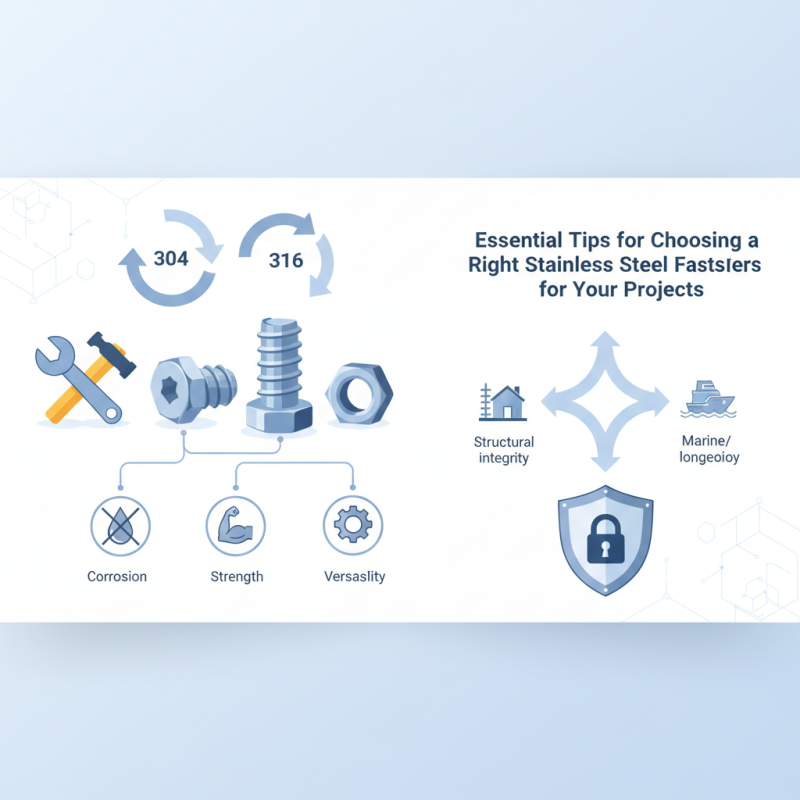
When embarking on a project that requires durable and reliable fastening solutions, the choice of materials can significantly influence the outcome. Among the various options available, stainless steel fasteners stand out due to their exceptional strength, corrosion resistance, and versatility. Choosing the right stainless steel fasteners is crucial not only for the structural integrity of your project but also for its longevity. This article offers essential tips to guide you through the selection process, ensuring that you make informed decisions tailored to your specific needs.
Understanding the different types of stainless steel fasteners, such as screws, bolts, and nuts, is the first step in this journey. Each type serves a unique purpose and may be suited for different applications and environments. Furthermore, factors such as grade selection—choosing between 304 and 316 stainless steel—can determine the fasteners' performance in various conditions. By gathering insight into the properties and applications of stainless steel fasteners, you can optimize your choices and enhance the safety and durability of your projects.
Understanding Stainless Steel Grades and Their Applications
When selecting stainless steel fasteners for various projects, understanding the different grades of stainless steel and their applications is crucial. The most common grades include 304 and 316.
Grade 304 is widely used due to its excellent corrosion resistance and good mechanical properties, making it suitable for general applications such as in kitchens, food processing industries, and indoor environments.
On the other hand, grade 316 offers increased resistance to chlorides and other corrosive elements, making it ideal for marine applications and environments with high salinity.
Furthermore, other specialized grades exist for particular needs. For instance, grade 410 is used in applications requiring high hardness and moderate corrosion resistance, while grade 2205, a duplex stainless steel, is used in situations where both high strength and good corrosion resistance are necessary, such as in chemical processing and oil and gas industries.
Understanding these distinctions aids in making informed decisions that align with the specific environment and mechanical demands of your project, ensuring longevity and reliability in fastener performance.
Key Factors in Selecting Fasteners for Environmental Conditions
When selecting the right stainless steel fasteners for your projects, understanding the environmental conditions they will face is crucial. The environment can significantly influence the performance and longevity of fasteners, making it essential to choose materials that can withstand specific conditions. For instance, in coastal areas where fasteners are exposed to salty air, utilizing a stainless steel grade like 316 can provide better corrosion resistance compared to 304 grade. According to the Corrosion Engineering Association, approximately 25% of all structural failures are due to corrosion, highlighting the importance of choosing fasteners that can endure their intended environments.
Moreover, temperature fluctuations and exposure to chemicals are pivotal factors to consider. Certain stainless steel fasteners can handle high temperatures, while others may become brittle in cold environments. The Society of Automotive Engineers (SAE) has documented that the performance characteristics of stainless steel can vary dramatically based on its alloy composition. Fasteners made from higher nickel content grades are often preferred in industries where extreme temperatures and chemical exposure are prevalent, showcasing enhanced stability and resistance to thermal degradation. Therefore, assessing both chemical compatibility and temperature resilience prior to selection is critical in ensuring the durability and reliability of stainless steel fasteners in your applications.
Essential Tips for Choosing the Right Stainless Steel Fasteners for Your Projects
| Fastener Type |
Material Grade |
Corrosion Resistance |
Recommended Applications |
Environmental Conditions |
Installation Method |
| Bolts |
A2 (304) |
Good |
General use, furniture assembly |
Indoor, moderate humidity |
Wrench or socket |
| Screws |
A4 (316) |
Excellent |
Marine environments, chemical processing |
Outdoor, harsh environments |
Power screwdriver |
| Nuts |
A2 (304) |
Good |
General use, automotive |
Indoor, low corrosion risk |
Hand tool or torque wrench |
| Washers |
A4 (316) |
Excellent |
Heavy machinery, construction |
Outdoor, extreme conditions |
Manual installation |
| Anchors |
A2 (304) |
Good |
Building and structural applications |
Indoor and outdoor |
Drill and setting tool |
The Importance of Corrosion Resistance in Fastener Selection
When selecting stainless steel fasteners for various projects, the foremost consideration should be corrosion resistance. Stainless steel is inherently resistant to rust and corrosion due to the presence of chromium, which forms a protective oxide layer on the surface. According to a report by the International Stainless Steel Forum, over 70% of stainless steel applications rely on its corrosion-resistant properties, making it a preferred choice in environments prone to moisture and chemical exposure.
However, not all stainless steel is created equal. Fasteners are classified into different grades, each with varying levels of corrosion resistance. For instance, the most commonly used grade, AISI 304, offers decent protection in general environments, but in more corrosive settings—such as marine or acidic conditions—AISI 316 is often recommended for its superior resistance due to the addition of molybdenum. The 2020 Fastener Quality Act Report highlighted that the choice of the right grade can significantly extend the lifespan of fasteners and reduce maintenance costs, reinforcing the importance of selecting materials suited to specific applications.
Understanding the environment in which fasteners will operate is crucial in making informed choices. In industries like construction, automotive, and manufacturing, the risk of corrosion can lead to severe structural failures and costly repairs if not appropriately addressed. An evaluation by the National Association of Corrosion Engineers indicates that corrosion damages the U.S. economy to the tune of $276 billion each year, underscoring the necessity of selecting the right stainless steel fasteners with robust corrosion resistance to safeguard both safety and investment.
Corrosion Resistance of Common Stainless Steel Grades
How to Assess Load-Bearing Requirements for Your Projects
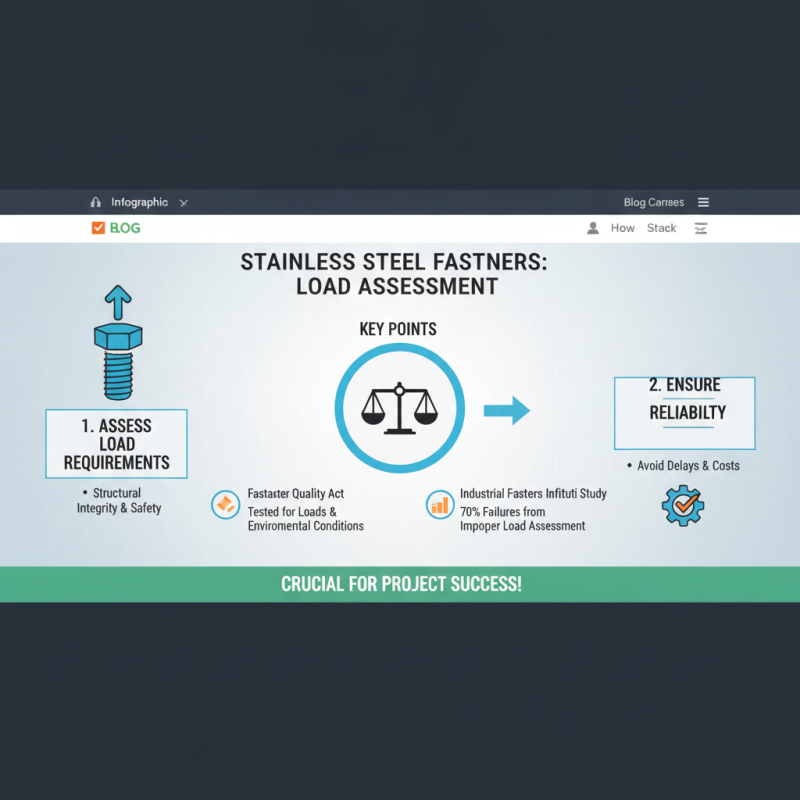
When embarking on projects that require stainless steel fasteners, assessing the load-bearing requirements is crucial to ensure structural integrity and safety. According to the Fastener Quality Act, fasteners must be tested to withstand specified loads and environmental conditions, ensuring they perform reliably under stress. For instance, a study by the Industrial Fasteners Institute highlights that over 70% of fastener failures are attributed to improper load assessments, which can lead to significant project delays and increased costs.
To accurately assess these load-bearing requirements, one must consider several factors, including the type of load (static or dynamic), the environmental conditions, and the fastener's material properties. A report from the American Society of Mechanical Engineers suggests utilizing calculators and engineering software specifically designed for fastener load analysis. These tools can help determine the proper specifications and dimensions needed to meet the project’s demands. Failure to adhere to these guidelines not only risks the safety of the installation but also impacts the overall longevity of the assembly. With stainless steel’s excellent corrosion resistance and strength, selecting the correct fastener—tailored for specific load conditions—is essential for achieving optimal performance in any project.
Cost Analysis: Balancing Quality and Budget in Fastener Choices
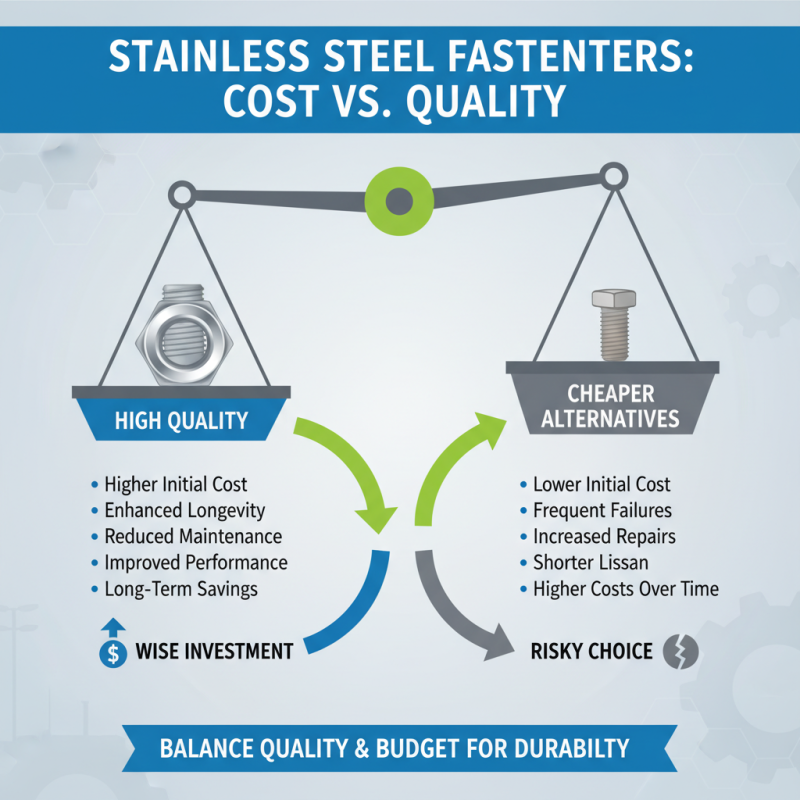
When choosing stainless steel fasteners, cost analysis is crucial for finding the right balance between quality and budget. High-quality fasteners can significantly enhance the longevity and performance of your projects, and while they may come at a premium, the potential for reduced maintenance and replacement costs can make them a wise investment. On the other hand, opting for cheaper alternatives may save money upfront but could lead to more frequent failures and repairs, ultimately resulting in higher expenses over time.
To ensure a smart financial decision, it's important to evaluate the specific requirements of your project. For instance, consider factors such as the environment in which the fasteners will be used, as exposure to corrosive elements might necessitate a higher grade of stainless steel. Additionally, performing a total cost of ownership (TCO) analysis that factors in durability and replacement frequency can provide better insight into the true cost of your fastener choices.
When selecting fasteners, keep these tips in mind: First, prioritize the grade of stainless steel based on the environment and load requirements. Second, analyze your project's lifecycle costs rather than just the initial purchase price. Lastly, consult with suppliers or industry professionals to gather insights on the best cost-effective options that do not compromise on quality. By carefully considering both quality and budget, you can make informed decisions that enhance your project's success.