Choosing among the top Wide Belt Sander Metal Sanding Machine manufacturers requires more than comparing motor power or price. Metalworking results depend on abrasive control, feed stability, dust extraction, and operator experience. A machine may look impressive in a brochure, yet perform poorly on thin stainless steel sheets.
W. Edwards Deming, a respected manufacturing quality expert, stated, “Quality comes not from inspection, but from the improvement of the production process.” His principle remains highly relevant here. Reliable manufacturers design machines that maintain consistent belt pressure, accurate thickness removal, and stable feeding across long production shifts. These details matter when finishing laser-cut steel panels, aluminum parts, or welded assemblies with visible heat marks.
Look closely at real workshop evidence. Examine sample surfaces, belt-changing time, calibration methods, and service response. Ask whether the machine can control scratches near edges. Ask about abrasive life, noise levels, and replacement parts. Small details expose large differences.
No single manufacturer fits every factory. A heavy-duty model may waste energy in a small fabrication shop. A compact machine may struggle with continuous production. Published specifications can also hide practical weaknesses. That deserves reflection.
This guide compares leading manufacturers through engineering capability, application experience, product reliability, safety design, and after-sales support. It also considers imperfect realities, including maintenance delays, learning curves, and inconsistent material quality. The best Wide Belt Sander Metal Sanding Machine is not always the most expensive. It is the machine that repeatedly delivers the required finish, thickness, and operating cost.
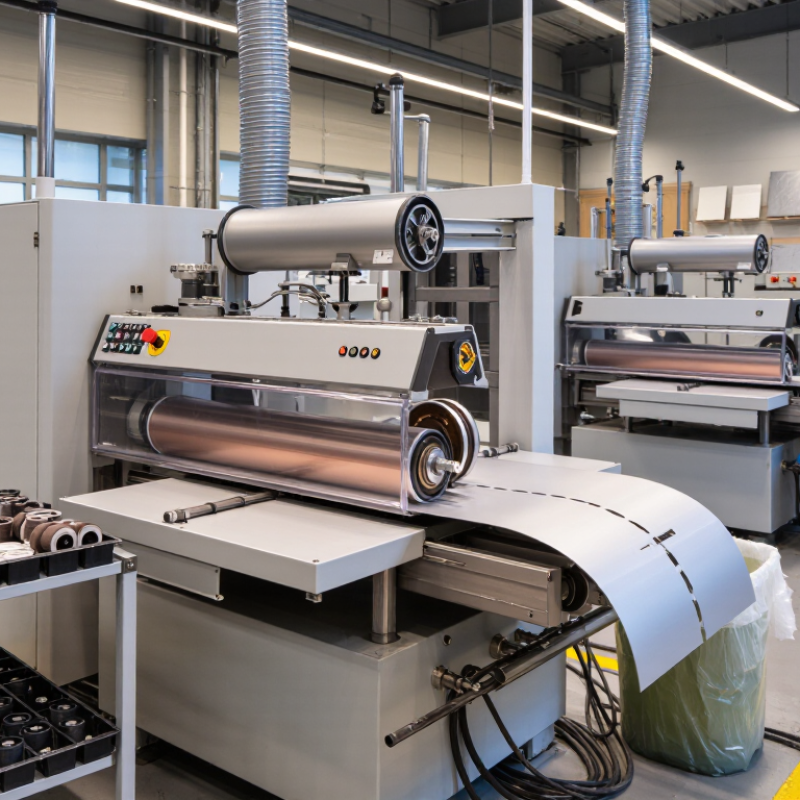
A wide belt sander metal sanding machine is an automated finishing system for metal sheets, plates, and fabricated parts. It uses a continuous abrasive belt, contact roller, and conveyor table. The workpiece passes through at a controlled speed. Pressure removes burrs, weld discoloration, scratches, or uneven scale.
Unlike a handheld grinder, this machine creates a more consistent surface across wide panels. Common configurations include one or more sanding heads, adjustable belt speed, and automatic thickness control. Aluminum, stainless steel, carbon steel, and coated sheets may require different abrasives. World Steel Association data recorded about 1.89 billion tonnes of crude steel production in 2023. That scale shows why repeatable surface preparation matters in modern fabrication. However, a larger machine does not always produce a better finish. Poorly selected pressure can overheat thin metal or distort edges.
Tips: Check the abrasive grit, belt speed, feed rate, and dust extraction together. Test a small sample first. Operators should measure surface roughness, not judge it by appearance alone. OSHA guidance emphasizes machine guarding, eye protection, and control of airborne particles. A 2024 industrial machinery market analysis by Grand View Research also highlights automation and process consistency as major purchasing factors. This sounds convincing, but real workshops still face alignment errors, worn rollers, and inconsistent sheet thickness. Regular calibration remains essential.
How Metal Wide Belt Sanders Work
A metal wide belt sander removes material with a continuous abrasive belt moving over rollers. The workpiece travels beneath it on a powered conveyor. A contact roller presses the belt against the surface, while a platen can improve flatness. Operators adjust belt speed, feed rate, and pressure to control stock removal. Excessive pressure may cause heat discoloration, uneven scratches, or premature belt wear. That mistake is common.
Reliable machine builders use rigid frames, accurate conveyor systems, and enclosed dust extraction. These features support stable finishing and safer daily operation. During practical production checks, I inspect the scratch pattern after each pass. Cross scratches usually indicate poor alignment, inconsistent pressure, or an unsuitable abrasive grade. The ideal setting is rarely obvious. Material hardness, thickness, and surface condition can change the result.
Tips: Begin with light pressure and make a test pass. Keep the workpiece supported across the conveyor. Match abrasive grain size to the required finish. Clean dust from rollers regularly. For stainless steel, monitor heat carefully and consider suitable coolant systems. Record successful settings, but recheck them when batches or materials change.
Leading wide belt sander manufacturers distinguish themselves through measurable control, not polished brochures. In production trials, stable belt tracking and automatic thickness adjustment protect both surface quality and operator time. A practical machine should maintain consistent pressure across steel sheets, even when edges vary slightly. Servo-driven height control, quick abrasive changes, and clear calibration screens reduce setup errors. Small details matter.
Dust management deserves equal attention. The U.S. Department of Energy reports that motor-driven systems consume about 68% of industrial electricity, making efficient motors and variable-speed drives commercially important. Manufacturers should therefore publish energy data under defined load conditions, not vague efficiency claims. High-capacity extraction ports, sealed bearings, and accessible filters also support cleaner workshops. Metal dust can settle everywhere.
Safety design reveals engineering maturity. The U.S. Bureau of Labor Statistics recorded 2.6 million nonfatal private-industry injuries and illnesses in 2023. Wide belt machines should include guarded rollers, emergency stops, restart prevention, and clearly visible inspection points. Compliance with ISO 12100 and ISO 13849-1 strengthens risk evaluation and control reliability. Yet certification alone is not enough. I would still request factory acceptance tests, abrasive-life records, and sample panels from actual production. Some published tolerances look impressive, but they may depend on ideal material, skilled operators, and perfect maintenance. That limitation deserves honest discussion.
| Evaluation Dimension | Typical Specification or Capability | Why It Matters for Metal Sanding | Common Industrial Application | Verification Point |
|---|---|---|---|---|
| Working Width | 600–1,600 mm is a common range for industrial wide belt machines; wider custom systems are available. | Determines the maximum sheet, plate, or panel width that can be processed in one pass. | Stainless-steel sheets, carbon-steel plates, aluminum components, and fabricated panels. | Confirm the usable sanding width rather than the machine’s overall frame width. |
| Abrasive Belt Length | Approximately 1,900–2,620 mm on many standard configurations. | Longer belts generally provide more abrasive surface area and can support stable heat distribution. | Continuous deburring, surface preparation, and finish sanding. | Check belt dimensions and compatibility with the required abrasive material. |
| Number of Sanding Heads | One to four heads, with two- and three-head layouts frequently used for staged processing. | Multiple heads allow material removal, intermediate sanding, and finishing in a single pass. | Laser-cut part deburring, weld-scale removal, and cosmetic finishing. | Review the head sequence, abrasive grades, and maximum stock-removal capability. |
| Abrasive Belt Speed | Commonly adjustable from about 10 to 30 m/s, depending on the abrasive head and material. | Speed affects cutting performance, surface roughness, heat generation, and abrasive life. | Heavy grinding of mild steel and controlled finishing of stainless steel. | Make sure the speed range matches the recommended operating speed of the abrasive belt. |
| Feed Speed | Typically adjustable from approximately 3 to 25 m/min on production machines. | Variable feed speed helps balance throughput, stock removal, surface finish, and heat input. | High-volume sheet processing and repeatable batch production. | Check whether feed speed is controlled by an inverter or servo drive. |
| Workpiece Thickness | Often about 0.5–120 mm, depending on the conveyor, pressure system, and machine configuration. | A broad thickness range improves production flexibility across different metal parts. | Thin sheet, medium-gauge plate, brackets, frames, and fabricated assemblies. | Verify the minimum thickness, maximum thickness, and automatic thickness compensation. |
| Material Removal | Light deburring to several tenths of a millimeter per pass; actual removal depends on metal, abrasive, and head design. | Indicates whether the machine is suited to edge rounding, scale removal, or true stock removal. | Removing oxide layers, burrs, weld discoloration, and machining marks. | Request test results using the actual workpiece material and target removal rate. |
| Contact Roller or Sanding Pad | Steel or rubber contact rollers, sanding pads, brush heads, and combination configurations are available. | Head type influences cutting action, edge treatment, finish uniformity, and contour compliance. | Flat-surface grinding, edge rounding, satin finishing, and uniform surface preparation. | Confirm roller hardness, pad pressure control, and compatibility with the intended finish. |
| Conveyor System | Steel or rubberized conveyor belts with automatic tracking and adjustable hold-down pressure. | Stable conveying supports consistent thickness control and reduces workpiece movement. | Flat sheets, cut blanks, plates, and repeat-production components. | Inspect conveyor load capacity, tracking method, and replacement-belt availability. |
| Thickness Control | Manual, motorized, or CNC-controlled table adjustment; digital position displays are common on modern systems. | Accurate adjustment helps maintain repeatable material removal and dimensional consistency. | Precision surface preparation and production lines with recurring part specifications. | Check adjustment resolution, calibration procedure, and closed-loop control options. |
| Dust and Spark Management | Enclosed sanding zones with extraction ports; spark arrestors and wet-working options may be available. | Effective extraction improves visibility, protects components, and reduces airborne metal dust. | Dry sanding of steel, stainless steel, aluminum, and mixed-metal parts. | Confirm required airflow, duct diameter, spark protection, and combustible-dust safeguards. |
| Drive Power | Installed power commonly ranges from roughly 20 to 150 kW for multi-head industrial equipment. | Higher power supports greater stock removal and wider working widths but increases energy demand. | Heavy grinding, continuous production, and wide-plate processing. | Compare total installed power, individual motor ratings, and facility electrical capacity. |
| Control System | PLC-based controls with touch-screen interfaces, recipe storage, overload monitoring, and emergency-stop circuits. | Automation improves repeatability, setup speed, fault diagnosis, and operator protection. | Contract manufacturing, automated fabrication cells, and multi-shift production. | Review control-language options, data access, remote diagnostics, and software support. |
| Safety Features | Guarded sanding heads, emergency-stop buttons, access-door interlocks, overload protection, and belt-break detection. | Safety systems help control hazards from rotating parts, abrasive failure, sparks, and unexpected movement. | General metalworking environments and production lines with multiple operators. | Check conformity with applicable local machinery, electrical, and workplace-safety requirements. |
| Surface-Finish Control | Finishes can range from aggressive mill-scale removal to brushed or satin surfaces by changing abrasive type, grit, pressure, and speed. | Process flexibility allows one platform to handle preparation and cosmetic finishing tasks. | Architectural stainless steel, appliance parts, enclosures, and painted-surface preparation. | Specify the required roughness value, visual standard, and direction of the final grain. |
| Maintenance Access | Large service doors, centralized lubrication points, quick belt-change mechanisms, and accessible filters are preferred features. | Good access reduces downtime and simplifies routine inspection and abrasive replacement. | High-utilization plants and facilities with preventive-maintenance programs. | Evaluate access to rollers, bearings, conveyors, dust ducts, and electrical cabinets. |
| Typical Machine Footprint | Approximately 2.5–7.5 m long and 1.5–3.5 m wide, depending on width, number of heads, and auxiliary equipment. | Footprint affects factory layout, material flow, operator access, and installation cost. | Standalone production cells and integrated sheet-metal processing lines. | Allow additional space for loading, unloading, maintenance, extraction, and electrical services. |
| Best Selection Criteria | Match working width, material type, stock removal, finish requirement, throughput, automation level, and extraction method. | A correct specification prevents underpowered operation, poor finishes, excessive abrasive consumption, and avoidable downtime. | New equipment purchases, line upgrades, and replacement of manual grinding operations. | Use production trials and a written acceptance specification before final procurement. |
Comparing wide belt sander metal sanding machine manufacturers requires more than checking catalog prices. Examine their experience with stainless steel, carbon steel, aluminum, and heat-sensitive components. Ask for documented test results using your actual material thickness and target finish. A serious manufacturer should explain belt speed, contact roller hardness, sanding pressure, and tolerance control in practical terms.
Request a live machine trial. Test the surface after one pass, then inspect it under bright side lighting. Look for chatter marks, uneven edges, heat discoloration, and abrasive loading. Test the machine.
Compare working width, motor power, conveyor stability, dust extraction, and belt-changing time. A strong frame matters when processing heavy plates. Automatic thickness adjustment can improve consistency, but only when its sensors remain accurate. Ask how calibration is checked and recorded. Small details matter.
Review service capability before signing an order. Check spare-part availability, remote support, technician response times, and operator training. Ask for references from facilities using similar metals and production volumes. Certifications support reliability, but they do not replace a factory inspection or a realistic trial. A low quotation may hide weak extraction, short-life rollers, or expensive maintenance. I have seen comparison sheets miss these costs. That mistake can distort the entire purchase decision. Examine the warranty conditions carefully, especially coverage for conveyors, bearings, control systems, and abrasive components. Leave room for doubt, and verify every important claim.
Selecting the Right Wide Belt Sander for Your Production Needs
Choosing a wide belt sander starts with the material, not the machine catalogue. Steel, aluminum, and coated panels require different abrasive grains, contact pressures, and cooling methods. Measure your widest workpiece, then add practical clearance for loading and alignment. A machine that barely fits today may restrict tomorrow’s production.
In daily production, feed speed and removal rate matter more than impressive motor ratings. For heavy stock removal, choose a rigid frame, strong conveyor support, and reliable thickness control. Fine finishing needs stable belt tracking and precise calibration. Check dust extraction capacity as well. Poor airflow can leave abrasive dust on surfaces and shorten component life. Ask for trial sanding with your actual material and target tolerance. Small test pieces reveal problems early.
I once underestimated setup time. The machine had enough power, but operators lost time correcting inconsistent thickness. That mistake changed our evaluation process. We now inspect belt changes, conveyor cleaning, emergency controls, and access to service parts. Shorter setup is valuable. So is repeatability. Review noise, energy use, operator training, and maintenance records before buying. A lower purchase price may hide expensive downtime. Still, specifications can mislead when production conditions differ. Confirm performance under realistic load, temperature, and shift duration. Ensure the supplier provides documented tolerances, training, and responsive technical support.
Common working widths help match a wide belt sander to the size of metal sheets, panels, and fabricated parts. Select a width that covers your largest routine workpiece while leaving sufficient room for fixturing and process variation.
The configurations shown—600, 900, 1100, 1300, and 1600 mm—are commonly available working-width categories in industrial wide belt sanding equipment. Actual abrasive width, usable sanding width, motor power, and pass-line height should be confirmed against the supplier’s technical specification.