Global buyers are paying closer attention to stainless steel cable as construction, marine, renewable energy, and industrial projects expand across regions. The Grand View Research Stainless Steel Market Size, Share & Trends Analysis Report estimates that the global stainless steel market was worth more than USD 130 billion in 2023. It also forecasts strong growth through 2030. These figures indicate opportunity, but they do not automatically prove supplier quality.
Material choice remains critical. Stainless steel cable made from 304 grade offers practical corrosion resistance for many indoor and general-purpose applications. Grade 316 performs better in coastal, chemical, and humid environments because of its molybdenum content. The International Stainless Steel Forum regularly reports global stainless steel production trends, helping buyers understand supply pressure and regional manufacturing capacity. Still, production volume is not the same as engineering reliability.
This guide examines ten stainless steel cable suppliers serving international buyers. The review considers product range, grade traceability, tensile performance, factory experience, testing practices, export capability, and customer support. Relevant references include ASTM A492, EN 12385, and ISO 9001 quality systems, where applicable. A dependable supplier should provide mill certificates, dimensional records, breaking-load data, and clear packaging details. Ask for samples.
Real projects expose weak assumptions quickly. A cable that looks polished may still have poor fatigue resistance, inconsistent diameter, or unclear origin. No supplier ranking is flawless. Buyers should verify current certifications, production capacity, lead times, and destination-country requirements before placing an order. Price matters, but replacement costs matter more.
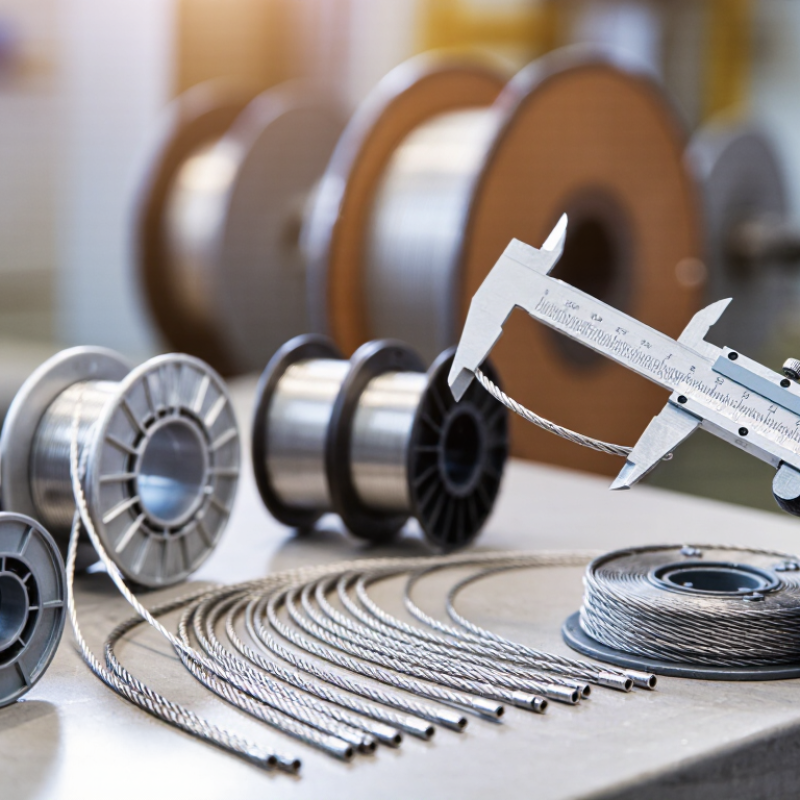
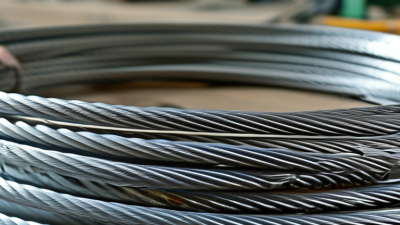
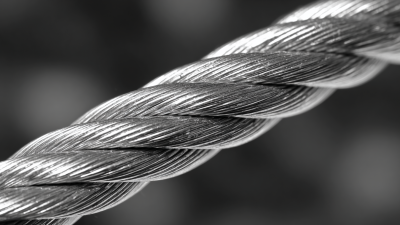
Stainless steel cable is a flexible rope made from multiple stainless steel wires twisted into strands. Common constructions include 1x19, 7x7, and 7x19. Each design balances strength, flexibility, and resistance to deformation. Grades such as 304 and 316 are widely used, while 316 usually performs better near salt water because of its stronger corrosion resistance.
Cable diameter and breaking strength must match the actual load. A small cable may look strong but fail under repeated bending, poor termination, or sudden shock. Experienced installers check the rated working load, end fittings, bend radius, and safety factor before installation. Certification and material records also matter. ASTM A492 may support verification, but buyers should still review current test documents and supplier quality controls.
These cables appear in marine railings, yacht rigging, architectural façades, bridge balustrades, and outdoor tension systems. They are also used in food-processing areas, medical equipment, and industrial guarding where clean surfaces matter. In coastal projects, salt deposits can still stain or damage stainless steel. Regular rinsing helps. Stainless is resistant, not invincible. One practical lesson is often missed: a high-quality cable can corrode early when paired with unsuitable fittings or trapped moisture. Inspect broken wires, rust spots, loose terminals, and unusual sag during maintenance. Selection should consider the environment, movement, cleaning chemicals, and expected service life, not appearance alone.
A technical buyer’s reference for comparing stainless steel cable constructions, materials, standards, and typical applications without displaying company or brand information.
Stainless steel cable is a flexible load-bearing product made by twisting stainless steel wires into strands and then forming those strands into a rope. Grade 304 is commonly selected for general corrosion resistance, while grade 316 is preferred for marine, coastal, and chloride-rich environments because of its higher molybdenum content.
| No. | Cable Construction | Typical Stainless Grades | Flexibility | Typical Size Range | Common Applications | Common Reference Standards | Key Buyer Requirement |
|---|---|---|---|---|---|---|---|
| 1 | 1 × 7 Seven wires forming one strand |
304, 316 | Low | Approximately 0.5–12 mm | Straight architectural runs, guy wires, balustrades, static supports | ASTM A492; EN 12385-10 | Dimensional accuracy, straightness, and corrosion-resistant surface finish |
| 2 | 1 × 19 Nineteen wires forming one strand |
304, 316 | Low | Approximately 1–16 mm | Architectural cable railings, tension systems, signage, rigging stays | ASTM A492; ISO 2408 | High breaking force, low stretch, and accurate terminal compatibility |
| 3 | 7 × 7 Seven 7-wire strands |
304, 316 | Medium | Approximately 1–12 mm | Control cables, light-duty hoists, greenhouse systems, display suspension | ISO 2408; EN 12385-4 | Balanced flexibility, consistent lay, and resistance to repeated bending |
| 4 | 7 × 19 Seven 19-wire strands |
304, 316 | High | Approximately 2–20 mm | Pulleys, winches, marine control systems, garage doors, fitness equipment | ISO 2408; EN 12385-4 | Fatigue performance, minimum bend radius, and sheave compatibility |
| 5 | 6 × 19 Six strands around a fiber or steel core |
304, 316 | Medium to high | Approximately 3–32 mm | General lifting, winch lines, construction equipment, utility support | ISO 2408; EN 12385-4 | Declared minimum breaking force, core type, and lifting certification |
| 6 | 6 × 36 Six flexible multi-wire strands |
304, 316 | Very high | Approximately 6–40 mm | Cranes, marine handling, elevators, heavy-duty lifting equipment | ISO 2408; EN 12385-4 | Bending fatigue life, lubrication method, and verified breaking load |
| 7 | 7 × 37 Seven highly flexible 37-wire strands |
304, 316 | Extremely high | Approximately 6–36 mm | Repeated-cycle hoists, complex reeving, marine machinery, moving mechanisms | ISO 2408; EN 12385-4 | Maximum flexibility, correct sheave diameter, and fatigue testing |
| 8 | Compacted strand rope Strands compressed to increase metallic area |
304, 316 | Medium | Commonly 8–40 mm | High-load lifting, compact winches, offshore and port handling | ISO 2408; applicable lifting regulations | High strength-to-diameter ratio, dimensional control, and inspection records |
| 9 | Plastic-coated cable Stainless cable with a polymer jacket |
304, 316 with PVC or nylon coating | Medium to high | Core approximately 1–8 mm; finished diameter depends on coating | Outdoor barriers, fitness equipment, agricultural systems, safety cables | ISO 2408 for the metallic core; coating specification required | UV resistance, operating temperature, coating adhesion, and cut-end sealing |
| 10 | Architectural cable assembly Cable supplied with swaged terminals or fittings |
Primarily 316; 304 for less aggressive environments | Depends on cable construction | Commonly 3–10 mm cable diameter | Balustrades, facades, green walls, canopies, tensile structures | ASTM A492; EN 13411 where applicable | Terminal pull-out strength, installation tolerances, and corrosion-resistant fittings |