Choosing the best type of wire rope clips is not simply a matter of selecting the strongest-looking clamp. The correct choice depends on rope diameter, construction, working load, environment, and termination method. A galvanized U-bolt clip may suit temporary lifting work, while a forged, high-strength clip may better serve permanent industrial installations. Stainless steel clips resist corrosion, but they may not match the strength requirements of heavy-duty lifting systems.
Industry guidance makes this decision more serious. OSHA 29 CFR 1926.251 specifies correct U-bolt orientation when forming wire-rope eyes and requires suitable installation practices. ASME B30.9, Slings, also emphasizes inspection, rated capacity, and proper termination. The Wire Rope Technical Board’s Wire Rope Users Manual warns that clip performance depends on spacing, torque, rope condition, and load direction. Small installation errors matter.
The numbers deserve attention. The U.S. Bureau of Labor Statistics reported 5,283 fatal occupational injuries in its 2023 Census of Fatal Occupational Injuries. Transportation and material-moving work represented a significant share of those incidents. These figures do not identify wire rope clips as a direct cause. They do show why connection details should never be treated casually.
No single clip is best everywhere. A clip that performs well on a static anchor may be unsuitable for repeated lifting or vibration. Field experience also exposes an uncomfortable truth: a clean-looking connection can still be incorrectly installed. This guide compares common clip designs, material choices, strength limits, and installation practices, helping readers make a safer, evidence-based decision.
What Is the Best Type of Wire Rope Clips?
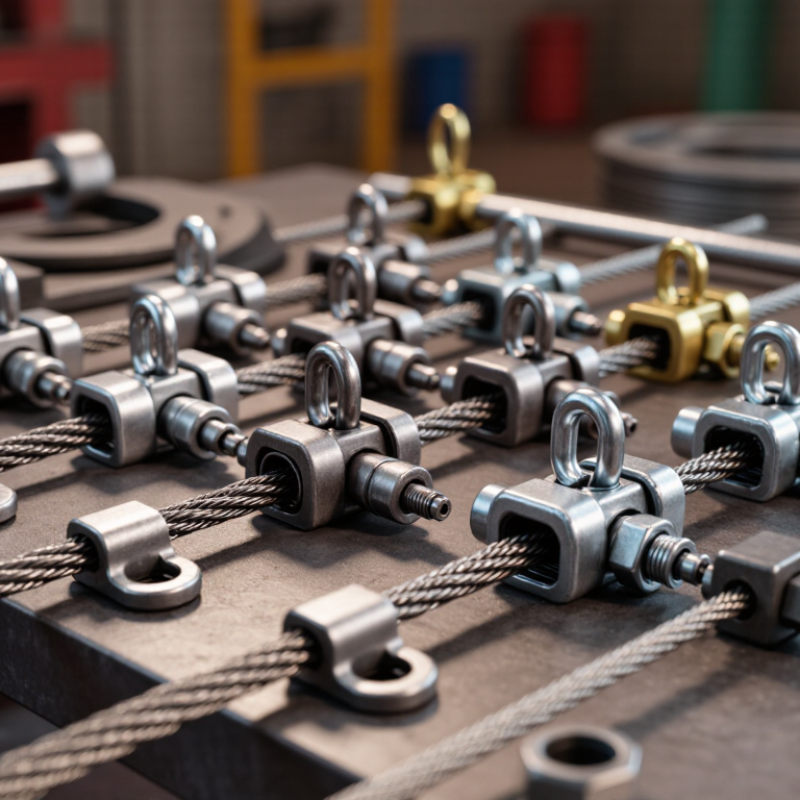
The best wire rope clip depends on load, environment, and installation quality. Drop-forged clips are usually preferred for heavy-duty lifting because forging creates a dense, strong body. They resist deformation when properly torqued. In field inspections, I look for cracked saddles, damaged threads, and uneven rope seating. Small defects matter.
Stainless steel clips suit wet, coastal, or chemically exposed locations. Their corrosion resistance is valuable, but stainless does not automatically mean higher lifting capacity. The manufacturer’s working-load data must match the rope diameter and application. A clean surface can mislead. Corrosion may be hidden beneath the saddle. ISO 2408:2017 links wire-rope selection to construction and minimum breaking force, so the clip should not become the weakest component.
Malleable iron clips are economical and useful for lighter, non-critical applications. They are generally unsuitable for demanding overhead lifting unless the rated design specifically permits it. OSHA 29 CFR 1910.184 provides termination guidance, including minimum clip quantities and spacing based on rope diameter. For common terminations, its table begins with three clips for rope sizes up to 1/2 inch. Each clip should place the saddle on the live rope end, with the U-bolt on the dead end. Retightening after initial loading is often overlooked. I have seen otherwise careful installations fail through poor alignment, not poor material.
| Comparison Factor | Drop-Forged Wire Rope Clips | Stainless Steel Wire Rope Clips | Malleable Iron Wire Rope Clips |
|---|---|---|---|
| Typical Material | Forged carbon steel, commonly zinc-plated or hot-dip galvanized | Corrosion-resistant stainless steel, commonly 304 or 316 grades | Malleable iron, usually galvanized for improved surface protection |
| Manufacturing Method | Drop forging forms the saddle under high pressure, producing a dense and strong component | Cast, forged, or machined depending on the design and grade | Cast from malleable iron and heat-treated to improve toughness compared with ordinary cast iron |
| Relative Strength | High; generally preferred for critical load-bearing terminations when correctly sized and installed | Moderate to high; depends on stainless grade, design, and manufacturing quality | Moderate; typically selected for lighter-duty or general-purpose applications |
| Corrosion Resistance | Good when galvanized, but the coating can wear or be damaged during service | Very good; 316 stainless steel is generally more suitable than 304 stainless steel for saltwater exposure | Good when galvanized; exposed or damaged areas can eventually rust |
| Ductility and Impact Tolerance | High for a properly manufactured forged clip; suitable for demanding service conditions | Generally good, but performance varies by stainless grade and product design | Better than ordinary gray cast iron, but generally less suitable for severe shock or dynamic loading than forged steel |
| Best Environmental Fit | Construction, industrial rigging, utility work, and outdoor applications where high strength is important | Marine, coastal, food-processing, architectural, and other environments where corrosion resistance is a priority | General outdoor, agricultural, fencing, and light-to-moderate service applications |
| Relative Cost | Medium; usually offers a strong balance between cost and load performance | High; stainless alloys and corrosion-resistant manufacturing typically increase cost | Low to medium; often an economical option for non-critical applications |
| Installation Requirements | Install with the saddle on the live rope and the U-bolt over the dead end; tighten to the specified torque | Use compatible hardware to reduce galvanic corrosion; follow the same correct orientation and torque principles | Requires correct rope diameter, orientation, spacing, and tightening; avoid overloading beyond its rated application |
| Inspection Needs | Check for bolt loosening, saddle deformation, corrosion, rope slippage, and broken or damaged wires | Check for galling, corrosion staining, thread damage, loosening, and rope condition | Check for cracks, coating loss, deformation, corrosion, bolt loosening, and rope slippage |
| Main Limitation | Carbon steel can corrode if its protective coating is damaged or maintenance is neglected | Higher purchase cost and possible galvanic corrosion when paired with dissimilar metals in wet conditions | Not normally the first choice for high-strength, shock-loaded, or safety-critical lifting applications |
| Best Overall Choice When | High strength and dependable load performance are the primary requirements | Long-term corrosion resistance is more important than initial cost | Economy and general-purpose use are the main priorities |
Selection note: Actual holding capacity depends on the clip design, wire rope construction, rope diameter, number of clips, spacing, installation torque, and applicable safety standard. Wire rope clips should not be used for critical lifting unless the specific product is approved and installed according to the relevant manufacturer and industry requirements.