Choosing the right u bolts in 2026 requires more than comparing prices and polished product photos. Global buyers must examine steel grade, thread accuracy, coating performance, load capacity, and manufacturing consistency. A U bolt may hold a trailer axle, secure industrial piping, or support agricultural equipment. Each application demands different dimensions and strength requirements.
This guide introduces ten u bolts selected for international purchasing needs. It considers common sizes, material options, corrosion resistance, customization, packaging, and supplier reliability. Products made from carbon steel, stainless steel, and galvanized steel perform differently in coastal, humid, and high-temperature environments. Small details matter. A poorly matched thread can delay installation. Weak packaging can damage protective coatings during ocean transport.
The evaluation also reflects practical sourcing experience. Clear drawings, sample testing, and inspection records often reveal more than a low quotation. Buyers should verify tensile strength, bend quality, surface treatment, and certificate accuracy before placing volume orders. Trusted manufacturers usually provide traceable batches and consistent communication. Still, no list can fit every project. That limitation deserves attention.
Some suppliers may appear competitive but lack stable quality control. Others may offer excellent engineering yet require larger minimum orders. This article compares those trade-offs for distributors, contractors, equipment manufacturers, and maintenance teams. It aims to support careful decisions, not encourage automatic purchasing. Check the specification twice. Real installation conditions can change everything.
What U Bolts Are and How They Work
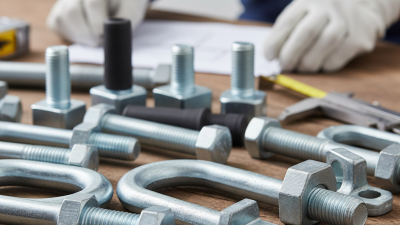
A U bolt is a curved metal fastener shaped like the letter U. Its two threaded legs pass through a mounting plate, bracket, or support. Nuts tighten onto the exposed threads. This action clamps the supported part against a surface. Common applications include pipe supports, trailer axles, suspension assemblies, and structural frames.
The curved section wraps around the pipe or bar. The threaded legs create downward holding force. A plate or saddle spreads that force across a wider area. This reduces movement and limits local damage. Correct sizing matters. The inside width must fit the component without excessive clearance. The leg length must leave enough thread for full nut engagement.
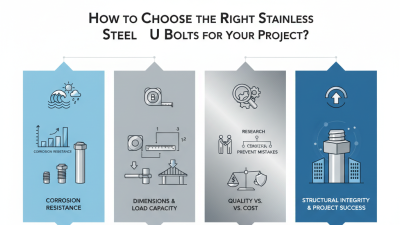
Material selection also affects performance. Zinc-coated steel can suit many outdoor applications, while stainless steel helps resist corrosion in humid environments. However, stainless grades differ in strength and should not be chosen by appearance alone. Check diameter, thread pitch, bend radius, coating, and load requirements.
A practical inspection should look for flattened bends, damaged threads, rust pits, and uneven nut engagement. Do not rely on hand tightness. Use the specified tightening method and recheck alignment after installation. A common mistake is treating every U bolt as interchangeable. They are not. I have seen small measurement errors create loose pipe supports and stressed brackets. Reconsider the specification when vibration, heat, or repeated loading is present.
| No. | U-Bolt Configuration | Typical Size Range | Common Material | Surface Finish | Thread System | Typical Applications | Key Selection Advantage |
|---|---|---|---|---|---|---|---|
| 1 | Standard Round U-Bolt | M6–M16; inside width approximately 20–80 mm | Low-carbon steel | Electro-zinc plated or plain | Metric coarse thread | General pipe, cable, conduit, and light structural fastening | Simple, widely available, and suitable for many general-purpose installations |
| 2 | Heavy-Duty Round U-Bolt | M16–M30; inside width approximately 60–180 mm | High-strength carbon steel | Hot-dip galvanized or plain | Metric coarse thread | Large pipe supports, agricultural equipment, trailers, and heavy frames | Greater section size and clamping capability than light-duty versions |
| 3 | Square U-Bolt | M8–M20; inside width approximately 30–150 mm | Carbon steel | Zinc plated or hot-dip galvanized | Metric coarse thread | Trailer axles, square tubing, signposts, and rectangular members | Flat sides align well with square or rectangular components |
| 4 | Saddle-Plate U-Bolt | M8–M24; plate width commonly 40–120 mm | Carbon steel | Zinc plated or galvanized | Metric coarse thread | Pipe racks, vehicle frames, machinery bases, and structural supports | Supplied with a shaped plate that distributes clamping pressure |
| 5 | Stainless Steel U-Bolt | M6–M20; inside width approximately 20–120 mm | 304 or 316 stainless steel | Natural stainless finish or passivated | Metric coarse thread | Marine equipment, food-processing areas, outdoor hardware, and chemical environments | Strong resistance to atmospheric corrosion; 316 is preferred for chloride exposure |
| 6 | Hot-Dip Galvanized U-Bolt | M8–M24; inside width approximately 30–180 mm | Carbon steel | Hot-dip zinc coating | Metric coarse thread | Outdoor pipework, utility structures, fences, solar support frames, and infrastructure | Thicker zinc protection than standard electroplating for outdoor service |
| 7 | Automotive Axle U-Bolt | Typically 1/2–3/4 in diameter; length selected for axle and spring stack | Heat-treated alloy or high-strength steel | Plain, zinc plated, or galvanized | Unified inch thread, commonly coarse | Leaf-spring suspension assemblies and trailer axle mounting | Designed for high clamping demand; exact diameter and length must match the axle assembly |
| 8 | Pipe-Hanger U-Bolt | M6–M16; sized to the pipe outside diameter | Carbon steel or stainless steel | Zinc plated, galvanized, or stainless | Metric coarse thread | Plumbing, HVAC, fire-protection, and industrial pipe support | Available in close-fit sizes that help limit pipe movement and vibration |
| 9 | Plastic-Coated U-Bolt | M6–M16; coating thickness commonly 1–3 mm | Carbon steel or stainless steel core | EPDM, PVC, or polyethylene coating | Metric coarse thread | Painted pipe, bicycle racks, handrails, electrical conduit, and vibration-sensitive assemblies | Reduces surface scratching, metal-to-metal contact, and minor vibration |
| 10 | Custom-Formed U-Bolt | Approximately M6–M30; width, height, and leg length made to drawing | Carbon steel, alloy steel, or stainless steel | Plain, zinc plated, galvanized, or passivated | Metric or Unified inch thread | Special machinery, transport equipment, renewable-energy frames, and non-standard pipe layouts | Best option when standard inside dimensions, bend radius, or leg length do not fit |
Important: A U-bolt works by placing its curved section around a pipe, axle, or structural member while the threaded legs pass through a plate or bracket. Tightening the nuts creates clamping force. Do not select a U-bolt by diameter alone; confirm inside width, inside height, thread length, bend radius, material grade, corrosion environment, tightening method, and required working load.