Top 10 Wire Rope Cutters for Global Buyers

Choosing the right wire rope cutter can affect cutting quality, operator safety, maintenance costs, and project efficiency. Global buyers often compare more than price. They need dependable tools that match rope diameter, construction, material, and working conditions.

This guide reviews ten wire rope cutters for different purchasing needs, including construction sites, marine maintenance, industrial workshops, and field service teams. Each option is considered through practical factors such as blade hardness, cutting capacity, handle comfort, portability, replacement parts, and supplier support. A tool that performs well on a six-millimeter rope may struggle with thicker, compacted strands. Specifications matter.

Real-world use also reveals details that product pages may overlook. A cutter should produce a clean cut without excessive crushing or frayed wires. Its jaws should open smoothly, even after repeated use. Grip texture becomes important when gloves are wet or oily. Small design choices can prevent larger problems.

Still, no single model is ideal for every buyer. Some cutters sacrifice portability for greater capacity. Others feel comfortable but require more frequent blade maintenance. Published ratings can also vary by testing method and rope condition. This comparison aims to provide a balanced starting point, not an absolute verdict. Check the manufacturer’s instructions and confirm compatibility before purchase. A small mistake matters. The final choice should reflect actual rope specifications, workplace conditions, inspection routines, and long-term support availability.

Top 10 Wire Rope Cutters for Global Buyers

Wire Rope Cutters: Definition, Functions, and Main Applications

Top 10 Wire Rope Cutters for Global Buyers

Wire Rope Cutters: Definition, Functions, and Main Applications

A wire rope cutter is a hand or powered tool designed to sever steel cables cleanly. Its hardened jaws compress and slice multiple strands without excessive fraying. This control improves handling, inspection, and fitting accuracy. Common designs include bolt cutters, ratchet cutters, and hydraulic models. Each type suits different rope diameters and working conditions.

These cutters support elevator maintenance, marine rigging, construction, mining, forestry, and lifting equipment service. A compact manual cutter works well for occasional repairs and smaller ropes. Ratchet mechanisms reduce hand effort during repeated cuts. Hydraulic cutters provide greater capacity for thick cables, but they require careful pressure control. In practical work, the wrong jaw size can flatten the rope instead of cutting it. That mistake is easy to overlook.

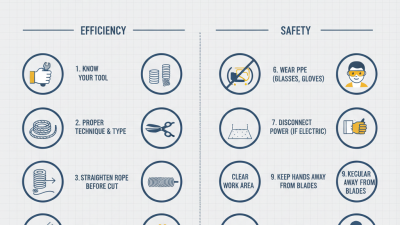
Tips: Check the rope diameter before purchase. Match the cutter’s rated capacity with a safety margin. Keep blades clean, aligned, and lightly lubricated. Wear eye and hand protection, especially when damaged wires may spring outward. Store the tool dry. Field users should also test a sample cut first, because published specifications cannot show every rope construction. A cutter may look powerful, yet feel awkward after ten minutes of use. Comfort deserves more attention than many buyers give it.

Key Specifications Global Buyers Should Compare

When comparing the top 10 wire rope cutters, global buyers should start with cutting capacity. Check the maximum rope diameter and construction type. A cutter rated for soft cable may fail on compacted steel rope. Look for hardened jaws with clean, controlled closing action. Rough cuts can damage rope ends and complicate later installation.

Handle length affects leverage, especially during repeated field work. Longer handles reduce hand force, but they also increase weight and storage space. I have found that balanced tools often feel safer than oversized models. Grip texture matters when gloves are wet or oily. Measure the tool’s weight, jaw opening, locking method, and replacement-part availability. These details are easy to ignore.

Material quality deserves careful attention. Forged steel usually offers better durability than lightly formed metal. Protective coatings can slow corrosion in humid ports, workshops, and outdoor sites. Still, coating alone proves little. Buyers should inspect hinge movement, jaw alignment, and edge hardness. Ask for test data, load guidance, and traceable quality documents. Certification claims should be verified through reliable records, not attractive product pages. A larger capacity rating is not always better. It may hide extra bulk, higher cost, or awkward handling. Suppliers should also compare packaging strength and maintenance instructions for international transport. Small gaps remain in many product listings, so requesting clear measurements can prevent expensive mistakes.

Top 10 Wire Rope Cutters by Design, Capacity, and Use Case

Top 10 Wire Rope Cutters for Global Buyers

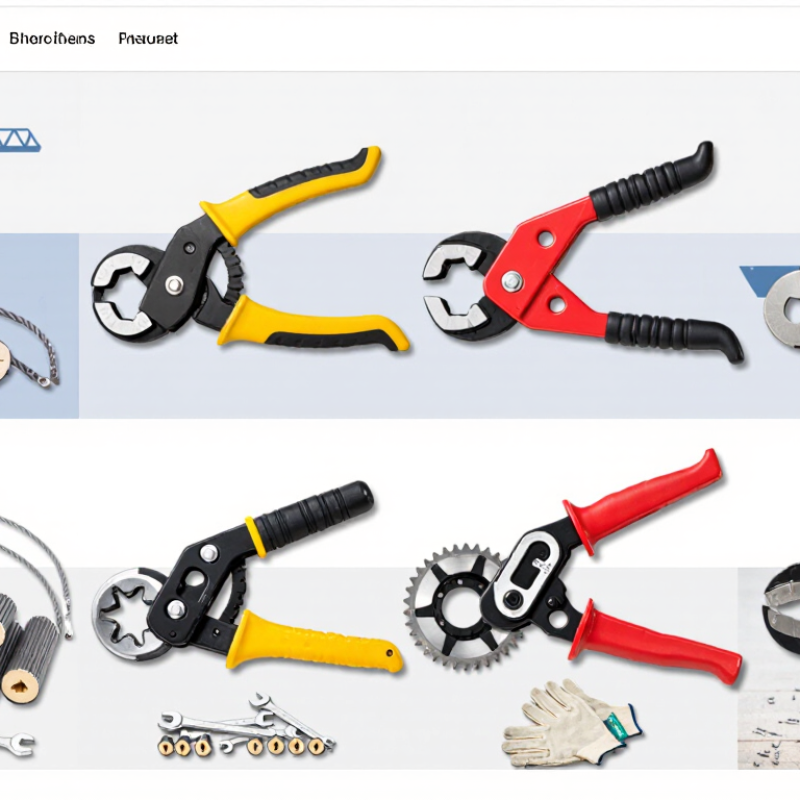
The best wire rope cutter depends on design, capacity, and use case. Compact ratchet cutters suit maintenance teams and field repairs. They create controlled cuts with less hand strain. Hydraulic cutters handle larger diameters, especially in lifting, marine, and construction work. Bench-mounted models offer repeatable cuts in workshops. Cable shears fit lighter wire rope and frequent service tasks.

Capacity must match the rope, not just the tool label. A cutter rated for 12-millimeter rope may struggle with compacted strands or high-strength steel. ISO 12385 classifies wire ropes by construction and performance, while EN 12385 testing guidance highlights rope structure and breaking force. These details matter during tool selection.

The International Labour Organization also reports that work-related accidents remain a major global concern, with approximately 2.93 million fatal occupational injuries annually.

A clean cut reduces loose wires, but it does not replace gloves, eye protection, or inspection. My practical concern is simple: users often trust diameter ratings too much.

Tips:

Check rope construction, hardness, and actual cutting frequency. For overhead lifting applications, follow the equipment maker’s inspection schedule and applicable local standards. Keep blades aligned and replace damaged components. A cheap cutter can become expensive after one poor cut. Test the tool on scrap rope first. That small step is often overlooked.

Safety Standards, Maintenance Needs, and Operating Considerations

Top 10 Wire Rope Cutters for Global Buyers: Safety Standards, Maintenance Needs, and Operating Considerations

Selecting the top ten wire rope cutters requires more than comparing cutting capacity. Safety compliance, blade design, grip control, and service access matter during daily use. ISO 4309:2017 recommends regular rope inspections, with attention to broken wires, corrosion, distortion, and diameter reduction. A cutter cannot correct unsafe rope conditions. It only creates a cleaner end.

The U.S. Bureau of Labor Statistics recorded 5,283 fatal workplace injuries in 2023. This figure covers all industries, but it reinforces one point: small handling decisions deserve serious control. Choose cutters with guarded moving parts, stable handles, and a rated capacity matching the rope diameter. Follow ASME B30.30 guidance where applicable, and apply local workplace rules. Inspect blades before every shift. A chipped edge can force extra pressure, causing hand movement or rope slippage. Clean salt, grit, and metal fragments after use. Lubricate pivot points according to the tool maker’s instructions. Over-lubrication can attract abrasive dust.

Tips: Lock the rope in a stable position before cutting. Wear eye, hand, and foot protection. Keep bystanders outside the recoil zone. Do not extend handles with loose pipe. That shortcut feels efficient, but it can damage the cutter. Record inspections, blade changes, and unusual resistance. Records expose patterns that memory misses. Manual cutters often need more physical effort than expected. This is where my own buying judgment can fail: laboratory capacity does not equal comfortable field operation. Consider temperature, corrosion, operator strength, and maintenance training before final selection.

Top 10 Wire Rope Cutters for Global Buyers — Safety Standards, Maintenance Needs, and Operating Considerations
Rank Cutter Type Typical Rope Diameter Range Cutting Method and Drive Typical Operating Capacity Safety Standards and Compliance Considerations Maintenance Requirements Operating Considerations Recommended Applications
1 Compact Manual Cable Cutter Up to approximately 6–10 mm Hand-operated bypass or shear blades; no external power source. Suitable for low-volume cutting of small-diameter galvanized or stainless-steel wire rope, subject to the tool manufacturer’s rating. Operators should follow ISO 12100 risk-control principles and wear eye and hand protection. The rope should be secured before cutting. Clean after use, inspect blade alignment, lubricate the pivot, and replace blades when cutting leaves excessive burrs or deformation. Requires adequate hand strength and stable positioning. Do not use on locked-coil rope or rope above the rated diameter. Light maintenance, marine accessories, fencing, rigging preparation, and field service.
2 Heavy-Duty Ratchet Rope Cutter Approximately 8–16 mm Progressive ratchet action with hardened shear jaws; manual mechanical drive. Offers greater mechanical advantage than standard hand cutters and is generally suitable for repeated medium-duty cuts. Use only within the rated rope size and construction. Follow local workplace safety rules and the inspection principles of EN 12385-4 for wire-rope condition. Inspect the ratchet pawl, return spring, fasteners, and jaw edges. Apply light lubricant to moving joints and keep the mechanism free of grit. Cut slowly and keep hands outside the jaw area. The ratchet must fully engage before force is applied. General rigging shops, installation work, agricultural equipment, and service vehicles.
3 Compound-Bolt-Cutter Style Tool Approximately 6–16 mm, depending on rope construction Compound-lever mechanical action using opposing cutting jaws. Can handle some small and medium ropes, but capacity is strongly affected by tensile grade, strand design, and rope compactness. Because crushing and strand displacement can occur, the cut end should be inspected before termination. It is not a substitute for a purpose-designed high-capacity rope cutter. Check jaw hardness, pivot bolts, handle insulation, and cutting-edge damage. Do not grind the jaws unless permitted by the tool instructions. May produce a less clean cut than hydraulic or guillotine systems. Temporary serving or clamping may be needed to prevent unlaying. Occasional workshop cutting where portability and low purchase cost are priorities.
4 Hand-Pump Hydraulic Rope Cutter Approximately 12–32 mm Manual hydraulic pump drives a hardened guillotine or shear blade. Provides high cutting force with relatively low operator effort; exact capacity depends on rope grade and blade geometry. Inspect for hydraulic leaks and use the tool within its rated pressure. Apply lockout and isolation procedures when cutting installed or tensioned systems. Check hydraulic fluid, seals, hose connections, blade sharpness, and pivot wear. Store with the blade retracted and protected. More controlled than impact cutting, but the rope must be supported and completely free of stored tension before cutting. Field rigging, utility maintenance, construction sites, and locations without electrical or battery power.
5 Battery-Powered Hydraulic Cutter Approximately 16–32 mm Rechargeable battery drives an electro-hydraulic pump and cutting head. Designed for repeated field cuts with lower physical effort and faster cycle times than manual tools. Use batteries, chargers, and electrical components according to their regional requirements. Do not operate in explosive atmospheres unless specifically certified for that environment. Inspect battery condition, hydraulic seals, blade clearance, trigger function, and charger cables. Keep contacts clean and store batteries within the recommended temperature range. Check remaining battery capacity before work. Allow the tool to cool if repeated cuts approach its duty-cycle limit. Mobile construction, telecommunications, utilities, offshore maintenance, and emergency repair work.
6 Electric-Hydraulic Shop Cutter Approximately 25–50 mm Mains-powered hydraulic pump with a fixed or semi-portable cutting head. Suitable for higher-volume workshop production and larger wire rope, provided the rope diameter and tensile rating remain within the equipment specification. Electrical protection, guarding, emergency-stop access, and preventive inspection should follow applicable machinery-safety requirements, including ISO 12100 principles. Maintain hydraulic oil, filters, seals, electrical connections, blade guides, and emergency-stop devices. Keep a service record for high-use equipment. Requires a stable workbench, suitable power supply, and sufficient clearance around the cutting zone. Fabrication shops, lifting-equipment service centers, shipyards, and industrial maintenance departments.
7 Pneumatic-Hydraulic Cutter Approximately 25–50 mm Compressed air powers a hydraulic intensifier or cylinder connected to a guillotine blade. Provides repeatable cutting for production environments where a clean pneumatic power source is available. Use an appropriately rated air hose, regulator, and shut-off valve. Pneumatic systems should be isolated and depressurized before maintenance. Drain moisture from the air system, inspect hoses and couplings, check oil levels where required, and maintain blade and guide surfaces. Air quality and pressure stability directly affect performance. Noise levels may require hearing protection in enclosed workshops. Assembly lines, shipbuilding, heavy-equipment repair, and facilities where electrical sparks must be minimized.
8 Bench-Mounted Guillotine Cutter Approximately 20–40 mm Fixed blade and moving guillotine operated by a long lever or hydraulic actuator. Offers stable alignment and repeatable cuts for medium-to-large ropes in a controlled work area. The blade path should be guarded or clearly marked. Operators should use safe-distance controls and follow workplace machinery guarding requirements. Inspect mounting bolts, blade edges, guides, stops, and structural welds. Lubricate pivots and verify that the blade returns fully after each cut. Requires a rigid base and sufficient bench strength. Rope ends may need serving or clamping before and after cutting. Rigging workshops, inspection facilities, and standardized rope-preparation operations.
9 Abrasive Cut-Off Saw Approximately 25–60 mm or more, depending on wheel size High-speed abrasive disc removes material through friction and heat. Can cut large ropes quickly, but the result depends on disc diameter, motor power, rope construction, and operator technique. Use a rated guard, eye and face protection, hearing protection, suitable clothing, and spark-control procedures. Follow the abrasive-wheel requirements applicable in the operating country. Inspect the disc for cracks and wear, check the guard and spindle, clean metal dust, and replace discs according to their rated service life. Creates sparks, heat, noise, and metal dust. Avoid use near flammable materials or heat-sensitive coatings unless controls are in place. Large-rope preparation, shipyards, heavy fabrication, and outdoor work where speed is more important than a cold cut.
10 Industrial Rotary Shear or Automated Rope-Cutting Machine Approximately 40–100 mm or more, subject to machine configuration Powered rotary knives, opposed shears, or programmable cutting heads with mechanical or hydraulic actuation. Best suited to high-throughput operations requiring repeatable cut length, controlled feed, and consistent production quality. Requires comprehensive guarding, emergency stops, access control, risk assessment, and documented operator training in accordance with applicable machinery-safety legislation. Follow a preventive-maintenance schedule covering drives, bearings, blades, sensors, guards, lubrication, and control-system diagnostics. Needs trained operators, stable foundations, material handling space, and a documented setup procedure for each rope construction. Large rigging manufacturers, cable-processing plants, offshore supply operations, and high-volume industrial workshops.
Buyer note: Cutting capacity is representative rather than universal. Always confirm the cutter’s rated diameter, rope construction, tensile grade, blade compatibility, duty cycle, power requirements, guarding, and regional conformity obligations before purchase. Never cut a wire rope under load or with stored tension. For lifting applications, inspect and handle the rope according to applicable requirements such as ISO 4309, EN 12385, ASME B30.9, OSHA regulations, or the relevant local equivalent.

How to Select the Right Wire Rope Cutter for International Purchase

Top 10 Wire Rope Cutters for Global Buyers

Choosing a wire rope cutter for international purchase requires more than comparing prices. Measure the rope diameter, construction, and tensile strength before contacting suppliers. A tool designed for soft cable may fail on compacted steel rope. Ask for cutting capacity, jaw material, and tested cycle life. Request clear product drawings and inspection photographs. Small details matter.

During field inspections, I check handle alignment, blade movement, and burr formation after several cuts. A clean cut should not flatten the rope excessively. Manual cutters suit occasional work and avoid electrical compatibility issues. Hydraulic models reduce operator effort but need reliable seals and replacement parts. For powered tools, confirm voltage, plug type, battery rules, and charging requirements. Packaging also deserves attention. Reinforced cartons can prevent bent handles during long-distance shipping.

International buyers should request a sample cut before placing a large order. Compare the result with the supplier’s stated capacity. Confirm spare blades, maintenance instructions, warranty terms, and response time. Ask whether technical documents support customs clearance and local workplace requirements. I once focused too heavily on cutting speed and overlooked grip comfort. After repeated use, that mistake became obvious. A lower-priced cutter may cost more when parts are difficult to obtain. Use a written comparison covering ten practical points, then record every unanswered question before payment.