What Are the Best U Bolts from China for Global Buyers?

Choosing the best u bolts from China depends on more than price. Buyers need to match the fastener’s shape, dimensions, material, and finish to its actual use. A U bolt securing a pipe to a frame may face different loads and environmental conditions than one used on a vehicle or construction assembly. Small details matter. Thread length, inside width, bend radius, and rod diameter should match the drawing or sample, not just a product photo.

A dependable supplier should provide clear specifications and answer practical questions about manufacturing and inspection. Ask how dimensions are checked, what material grades are available, and whether test reports or certificates can be supplied for the order. Confirm coating requirements, packaging, tolerances, and delivery terms in writing. If the application is safety-critical, seek guidance from a qualified engineer and verify that the product meets the standards required in its intended market. Claims alone are not proof. Requesting a sample can reveal issues that a catalogue may not show, such as uneven threads or a rough finish. Yet one sample cannot guarantee every production batch. That is worth remembering. This guide explores the factors global buyers can use to compare Chinese manufacturers, assess product quality, and reduce sourcing uncertainty. There is no single “best” option for every project; the right choice depends on verified requirements, consistent communication, and evidence that fits the application.
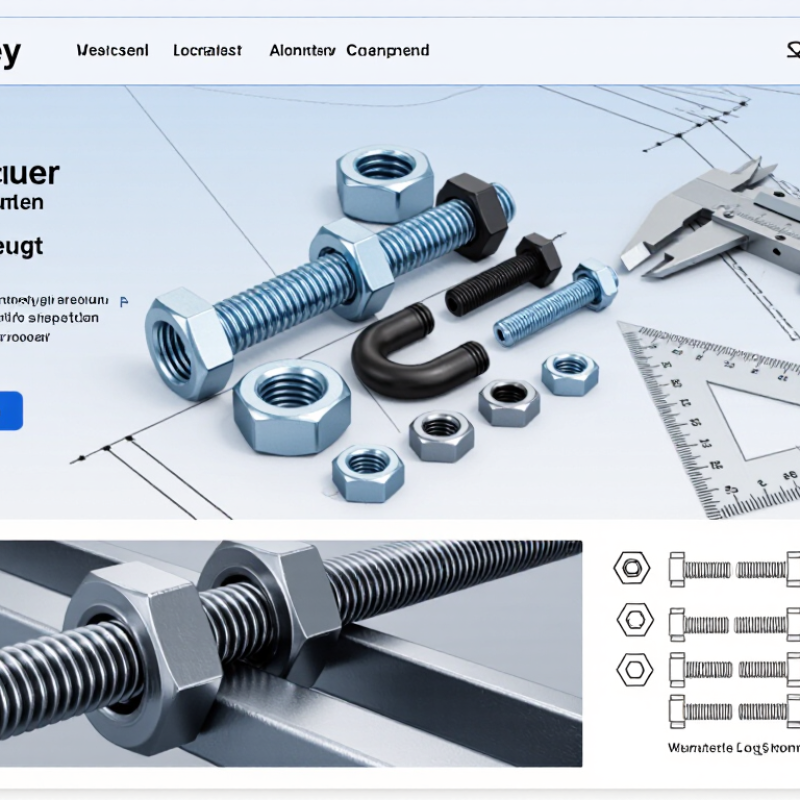
What Are the Best U Bolts from China for Global Buyers?

U-Bolts Explained: Design, Shapes, and Common Applications

A U-bolt is a curved fastener with two threaded legs, usually shaped like the letter U. Its curve fits around a pipe, tube, cable, or structural member, while nuts and washers secure the ends to a plate or bracket. The shape looks simple. Fit is not.

Common designs include round U-bolts for pipes and square U-bolts for rectangular sections or mounting frames. Some have longer legs for thicker assemblies; others use shorter legs where clearance is limited.

Buyers should check inside width, leg length, thread length, rod diameter, and bend radius against the actual part. A small mismatch can make installation awkward or leave too little thread for secure tightening.

Applications

Applications range from supporting plumbing and conduit to fastening vehicle components, solar frames, and industrial equipment.

Material & finish

Material and finish matter too: stainless steel can suit damp environments, while coated carbon steel may work for other conditions. Neither choice is universal.

A coastal site, for example, needs a closer look at corrosion exposure and maintenance. Ask suppliers for clear drawings, material details, and dimensional tolerances, then compare samples when fit is critical. A drawing can still miss a detail on the shop floor; that deserves a second check.
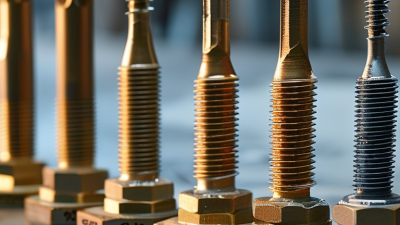
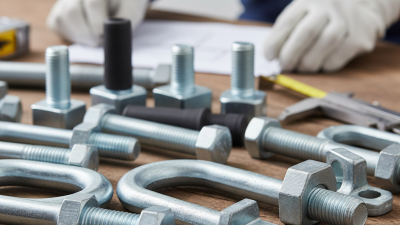
Materials and Manufacturing Processes Used by Chinese U-Bolt Makers

What Are the Best U Bolts from China for Global Buyers?

Chinese U-bolt makers commonly use carbon steel, alloy steel, or stainless steel wire rod. World Steel Association data recorded about 1.019 billion tonnes of Chinese crude steel production in 2023. ISSF statistics reported 58.4 million tonnes of global stainless-steel production in 2023, including approximately 36.7 million tonnes from China. This capacity supports flexible sourcing. However, large output does not guarantee stable quality.

Material choice depends on load, temperature, and corrosion exposure. Carbon steel suits many pipe supports and vehicle applications. Grade 8.8 or 10.9 steel requires controlled quenching and tempering. Stainless 304 or 316 performs better in wet environments, but it costs more. Manufacturing usually includes wire cutting, U-bending, thread rolling or cutting, heat treatment, and surface finishing. Cold forming can improve thread consistency. Excessive bending may distort the legs. Hot-dip galvanizing offers a thicker zinc layer than electroplating, though thread fit may change. ISO 898-1 and applicable ASTM specifications help define strength and testing. Still, standards cannot replace factory audits. A sample can pass while a production lot drifts.

Tips: Request heat numbers, material certificates, hardness results, tensile tests, and coating-thickness records. Check leg spacing after coating. For high-strength electroplated bolts, ask about hydrogen-embrittlement controls. A polished certificate is not proof by itself. The overlooked detail is traceability.

Standards, Testing, and Quality Checks for Global Markets

For global buyers, the best U bolts are not chosen by appearance alone. They are matched to load, thread size, bend radius, coating, and service temperature. Carbon steel U bolts should be linked to a declared material grade and mechanical property class. ISO 898-1 provides tensile and proof-load requirements for many carbon and alloy steel fasteners. ASTM F606/F606M offers practical methods for tensile, proof-load, and hardness testing. These references should appear clearly on inspection documents.

A reliable supplier should provide heat numbers, mill certificates, dimensional records, and coating thickness results. Measure thread diameter, pitch, leg length, inside width, and bend symmetry. Check several pieces from each production lot. The 2023 ISO Survey reported 1,265,216 ISO 9001 certificates worldwide, showing the broad use of formal quality systems. Certification helps, but it does not replace product testing. That point is often missed.

Corrosion checks need careful interpretation. ASTM B117 salt-spray testing can compare coatings under controlled conditions, but it cannot perfectly predict outdoor service life. Ask for test duration, coating type, substrate preparation, and failure criteria. Visual inspection should look for cracks, uneven galvanizing, damaged threads, and sharp tooling marks. Keep samples from every shipment. No checklist is perfect. A small bend deviation may pass paperwork yet create installation stress. Buyers should review rejected parts, not hide them, because those records often reveal weak process controls before a field failure occurs.

What Are the Best U Bolts from China for Global Buyers? - Standards, Testing, and Quality Checks for Global Markets

Evaluation area Relevant standard or reference What buyers should verify Useful quality check
Product dimensions and form DIN 3570, where specified for U-bolts for pipework Confirm the applicable drawing and dimensions, including inside width, leg length, bend radius, thread length, and tolerances. Do not assume one standard covers every U-bolt design. Measure samples with calibrated gauges; check fit against the intended pipe or mounting assembly.
Carbon and alloy steel fastener properties ISO 898-1, when its property classes and scope are specified for the fastener State the required material and property class in the purchase specification. Confirm that the selected requirements are appropriate for the formed U-bolt and its application. Review material test records and agreed mechanical test results; verify that test methods and acceptance criteria are documented.
Stainless steel fastener properties ISO 3506-1, where the specified stainless fastener type and scope apply Specify the stainless grade and property class, such as an applicable A2 or A4 class. Confirm suitability for the service environment; stainless steel is not immune to corrosion. Check material traceability and certificates; verify grade by an agreed method if required by the contract.
Nuts and mating components Specify the applicable nut standard and property class separately; ISO 898-2 covers mechanical properties of nuts for specified property classes. Check thread size, pitch, fit, material compatibility, and strength pairing. Include washers and other components in the assembly specification where needed. Check thread engagement and fit with a thread gauge or mating nut; verify component identification and documentation.
Hot-dip zinc coating ISO 10684 or ASTM F2329, as specified for the applicable fastener and coating requirements Agree the coating standard, thickness or acceptance requirements, thread allowance, and whether nuts are tapped or otherwise finished after coating. Inspect coating coverage and finish; measure coating thickness using an appropriate method and check threaded fit after coating.
Electroplated zinc coating ASTM B633, when specified for electroplated zinc coatings on iron and steel Specify the required service condition and supplementary finish requirements. Consider hydrogen embrittlement risk for susceptible high-strength parts and require suitable process controls where relevant. Review coating records and agreed thickness checks; visually inspect for bare areas, blistering, or damage.
Corrosion testing ISO 9227 salt-spray test methods, when required by the specification Agree the test method, duration, sample condition, and acceptance criteria before production. Salt-spray results do not directly predict service life in a particular environment. Review the laboratory report and examine test pieces for the contractually defined corrosion criteria.
Material traceability and inspection records EN 10204, when the purchase order requires a specified type of inspection document Define the required document type, heat or batch identification, inspection scope, and traceability level in the order. Match certificates and test reports to the delivered batch; check that markings and packing labels are consistent.
Final shipment inspection Purchase drawing, agreed inspection plan, and applicable product and coating specifications Set sampling level, acceptance criteria, packaging, quantity, and required records before shipment. Check dimensions, threads, surface condition, coating, labeling, quantity, and packaging against the approved order documents.

Buyer note: The best U-bolt is one that meets the application-specific drawing, material, mechanical-property, coating, and inspection requirements agreed in the purchase order. Standards have defined scopes and are not interchangeable; confirm applicability with the supplier and, where necessary, a qualified engineer.

How to Compare Chinese U-Bolt Suppliers and Product Options

What Are the Best U Bolts from China for Global Buyers?

Comparing Chinese U-bolt suppliers requires more than checking price. Start with steel grade, thread accuracy, bend radius, coating, and load requirements. ISO 898-1 defines mechanical property classes for carbon steel fasteners. Ask suppliers to provide mill certificates and batch-level test reports. A practical audit should include thread gauges, coating thickness checks, and visual inspection of bends. Uneven bends can create installation stress. That detail is easy to miss.

Market data also needs careful reading. UN Comtrade classifies many bolts and U-bolts under HS 7318, allowing buyers to compare China’s export value and quantity by destination. However, customs data does not confirm product quality. The 2024 World Steel Association outlook reported global steel demand growth of about 1.7% for 2024. This supports careful material sourcing, but it does not justify accepting vague specifications. Compare quotations using the same diameter, leg length, steel grade, finish, packaging, and testing scope. Otherwise, the cheapest offer may not be comparable.

Tips: Request three samples from different production batches. Measure thread pitch and leg spacing with calibrated tools. Confirm salt-spray testing against the required coating standard. Ask for photos before shipment, but do not treat photos as inspection evidence. An independent pre-shipment inspection is safer. I have seen buyers focus on unit price and overlook carton strength, causing damaged threads during ocean transport. That mistake remains expensive.

Use coating specifications to compare U-bolt options, not as a ranking of suppliers. The values shown are ISO 1461 minimum average coating thicknesses for hot-dip galvanized articles by steel thickness category. Confirm the applicable standard, product dimensions, and inspection requirements with each supplier.

Ordering, Customization, and Shipping U-Bolts from China

Ordering U-bolts from China starts with a clear drawing, not just a size list. Specify thread diameter, leg length, inside width, bend radius, material grade, and coating. A small sketch can prevent a costly mismatch. Ask for samples and inspection records before approving a production run. Check thread fit, coating thickness, and dimensions against your own requirements. One detail buyers sometimes overlook: the nut and washer must suit the bolt’s thread and service conditions.

Customization should be confirmed in writing. Share the load direction, installation environment, and expected exposure to moisture or chemicals. These details help the supplier recommend suitable materials and finishes, but they do not replace engineering review. Agree on tolerances, packaging, quantity, and inspection criteria before production. Then request dated photos or a third-party inspection for higher-risk orders. It may feel excessive. Still, rework is worse.

Shipping plans need the same attention as specifications. The UNCTAD Review of Maritime Transport 2024 reported that global maritime trade grew 2.4% in 2023 and projected 2.0% growth for 2024. This broad market data is not a delivery-time guarantee; port congestion and routing can change schedules. Ask for the shipment’s dimensions, gross weight, packing method, and estimated dispatch date. Compare sea and air freight against urgency and total landed cost. Build in buffer time. A realistic order includes room for delays, document checks, and a final count on arrival.