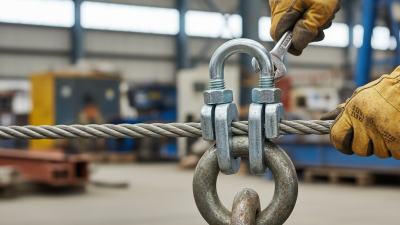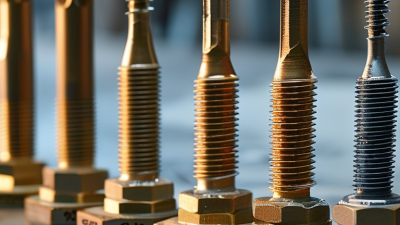
Buying stainless steel eye bolts in 2026 requires more than comparing prices and polished surfaces. These components may support suspended loads, guide cables, or secure equipment. Their suitability depends on design, material grade, thread accuracy, working load limits, and installation conditions. A bright finish proves little.
The International Stainless Steel Forum reported approximately 62.6 million tonnes of stainless steel production in 2024. This figure reflects a large, complex supply chain, not guaranteed product quality. Buyers should request material certificates, heat numbers, dimensional drawings, and test records. ISO 3266 covers forged steel eyebolts for general lifting purposes, while ASME B30.26 addresses detachable rigging hardware. These references help separate certified lifting hardware from ordinary fastening products.
Small details matter. Check whether the eye is forged or bent. Confirm the thread matches the receiving hole. Inspect the shoulder, weld area, and surface for cracks or sharp marks. For coastal or chemical environments, compare 304 and 316 stainless steel carefully. 316 usually offers stronger resistance to chlorides, but it is not universally suitable.
Supplier evidence matters most.
A reliable vendor should explain load direction, proof testing, batch traceability, and inspection limits. Independent reports from organizations such as TÜV, SGS, or accredited laboratories can strengthen confidence. However, certificates still require verification against the exact product batch.
No checklist is perfect. Product names can be misleading, and “stainless” does not automatically mean “lifting-rated.” This guide examines how to buy stainless steel eye bolts in 2026 with practical questions, recognized standards, supplier screening, and realistic risk awareness.
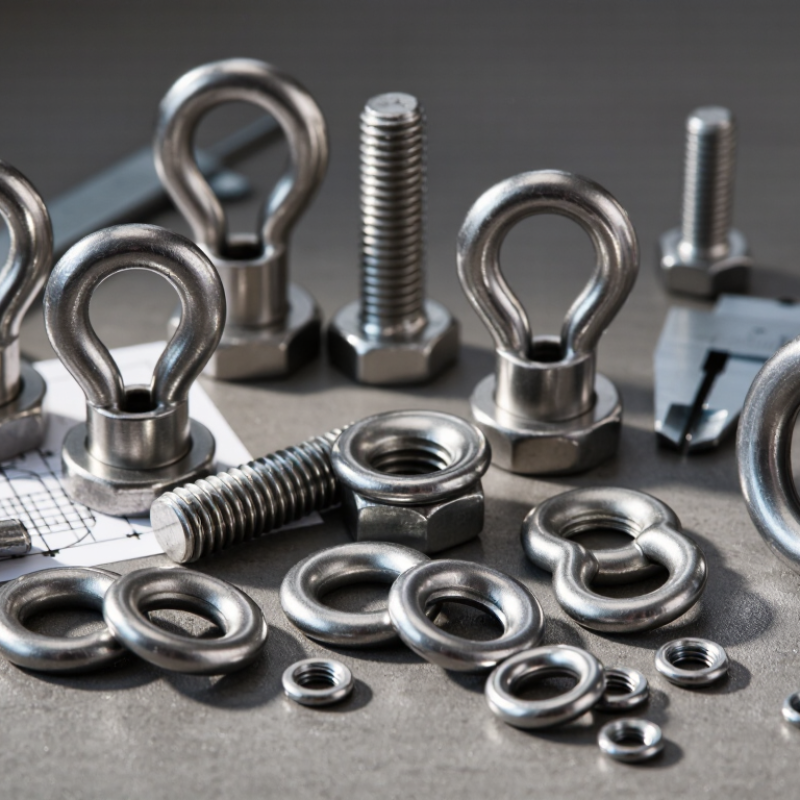
Buying stainless steel eye bolts starts with the real load, not the package label. Identify the working load, shock, vibration, and lifting direction. A bolt used for vertical tension differs from one exposed to side loading. Side pulls can bend the shank or distort the eye. That detail is easy to miss.
Measure the required thread diameter, pitch, and length before ordering. Match the thread to the receiving hole, nut, and available engagement depth. Avoid forcing a coarse thread into a fine-thread hole. Choose stainless steel according to the environment, such as humid, coastal, or chemically exposed areas. Common grades may resist corrosion differently. Check the supplier’s documented working load limit, test method, and dimensions. Tensile strength alone does not prove safe lifting performance.
Tips: Sketch the installation first. Mark the load direction. Confirm the eye’s internal diameter with your hook or shackle. Inspect threads for dents, uneven machining, and contamination. Tighten only as specified, and never assume a decorative eye bolt can carry a lifting load. I have seen selection decisions focus too heavily on appearance. That is not enough. Recheck the load path after installation. If the eye twists, stop and reassess the design.
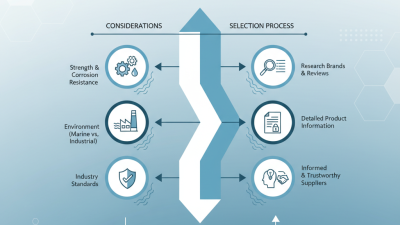
Choosing an eye bolt begins with the environment, not the price. Indoor workshops usually suit 304 stainless steel. It handles ordinary humidity, light washing, and general assembly work. Salt air is unforgiving. Coastal sites, marinas, and deicing-salt areas often require 316 stainless steel. Its molybdenum content improves resistance to chloride corrosion.
Chemical exposure needs closer review. Cleaning agents, acids, high temperatures, and stagnant moisture can change the correct choice. For severe service, a corrosion specialist may recommend a higher alloy, such as 316L or a more specialized grade. Do not guess. A shiny surface does not prove long-term safety.
Check the eye bolt’s working load limit, thread size, eye shape, and manufacturing standard. Match the bolt with compatible nuts and washers. Mixed metals can create galvanic corrosion, especially in wet conditions. Inspect threads for burrs, uneven finishing, and trapped polishing compound. Small details matter.
A practical buying check includes the material certificate, proof-load information, and traceable inspection records. The bolt must also fit the actual lifting angle and connection design. Never treat a threaded eye bolt as a lifting point unless its rating supports that use. I have seen buyers focus on grade while overlooking side loading. That mistake is easy to make. It deserves a second look before ordering.
Buying stainless steel eye bolts in 2026 requires more than choosing a shiny finish. Verify the diameter, eye inside width, shank length, and thread pitch against your drawing. ASME B18.15 provides dimensional guidance for forged lifting eye bolts. A mismatch of only 1–2 millimeters can prevent proper seating.
Strength ratings need careful reading. ISO 3506-1 lists minimum tensile strengths of 700 MPa for A2-70 and 800 MPa for A4-80 stainless fasteners. These figures describe material performance, not the safe working load of an eye bolt. The eye shape, thread engagement, loading angle, and installation method also matter. ASTM F593 covers corrosion-resistant stainless steel fasteners, but it does not replace a product-specific load certificate. In practice, I would reject any bolt with unclear markings or visible thread damage. That may seem cautious. It is still cheaper than correcting a failed installation.
Tips:
Match metric threads with metric nuts, and imperial threads with imperial nuts. Check pitch using a thread gauge, not visual judgment. Confirm the bolt enters fully by hand before applying torque. Keep the load aligned with the eye. Side loading can sharply reduce capacity. Request material certificates and proof-load documentation for critical applications. One overlooked detail is washer fit: a narrow washer can distort the mounting surface and create false confidence. Never assume stainless steel means corrosion-proof in saltwater or chemical environments.
How to Buy Stainless Steel Eye Bolts in 2026?
Buying stainless steel eye bolts requires more than comparing online prices. I check the supplier’s production experience, inspection process, and customer support. A reliable supplier should provide clear drawings, load information, and material traceability. Ask whether each batch includes a material test report. It should identify the stainless steel grade and heat number. Certifications also matter. Look for quality systems such as ISO 9001 and applicable product standards, including ASTM or ASME references. However, a certificate alone does not prove product quality.
Compare suppliers using the same specifications. Check eye diameter, thread size, shank length, surface finish, and safe working load. A lower unit price can hide extra costs for testing, packaging, or custom threading. I once focused only on the cheapest quotation. The shipment arrived quickly, but the threads needed rework. That shortcut was not efficient. I now request sample photos and dimensional inspection records before placing larger orders.
Delivery options should match the project schedule. Standard stock may arrive within days, while custom sizes can require several weeks. Ask for production time, dispatch time, tracking details, and packaging protection. Sea freight costs less but takes longer. Air freight is faster, yet expensive for heavy steel parts. Confirm the delivery terms and destination charges in writing. I still leave a small time buffer, because supplier promises can change during busy periods. Ensure the final documents match the actual goods before installation.
Indicative comparison of anonymous supplier types using 316 stainless steel eye bolts, M10 × 100 mm, ordered in lots of 100 pieces.
| Supplier Type | Typical Price / 100 pcs | Typical Delivery | Certification Documents to Request | Best For |
|---|---|---|---|---|
| Stock distributor | US$120–180 | 3–7 days | Material certificate, dimensional inspection report | Urgent or small-volume orders |
| Factory-direct supplier | US$75–125 | 15–30 days | ASTM F593 or ISO 3506 compliance, EN 10204 3.1 certificate | Recurring orders and price control |
| Custom OEM supplier | US$95–160 | 25–45 days | Approved drawing, tensile test report, PMI report, traceability records | Non-standard dimensions or special threads |
| Local industrial supplier | US$140–220 | 1–5 days | Certificate of conformity, grade confirmation, batch traceability | Domestic replenishment and low logistics risk |
Prices and delivery times are planning benchmarks rather than quotations and can change with stainless steel grade, thread type, order quantity, testing requirements, import duties, and shipping method. For critical applications, specify 304 or 316 stainless steel and request documentation against ASTM F593, ISO 3506, or an equivalent standard. Sea freight generally offers the lowest transport cost for bulk orders, while air freight provides faster delivery at a higher cost.
After buying stainless steel eye bolts, inspect each piece before installation. Check the thread, eye, shoulder, and surface for cracks, burrs, deep corrosion, or distortion. Confirm the marking, thread size, material, and working load limit match the purchase record. A certificate helps, but it does not replace visual inspection.
The ASME B30.26 rigging-hardware standard emphasizes inspection, correct loading, and removal of damaged hardware. HSE’s 2023/24 workplace statistics recorded about 543,000 non-fatal work injuries in Great Britain. Small failures matter. Place the eye bolt fully into a clean, compatible threaded hole. The shoulder should sit firmly against the load surface when the design requires it. Do not force a tight thread with a hammer. That mistake is common.
Align the load with the eye. Avoid side loading, shock loading, and sudden lifting. Use the manufacturer’s stated tightening method and load limit; never guess torque from appearance. A swivel point may be safer for changing angles. After installation, apply a light test load and watch for movement, thread pullout, or bending. Stop immediately if anything shifts. Recheck the connection after the first lift. I would not skip this step, even when the bolt looks new. Temperature, vibration, and hidden thread damage can defeat a perfect-looking installation. Record the inspection date and remove questionable hardware from service. Safety margins are not decorations.
| Buying or Installation Dimension | Recommended Requirement | What to Inspect or Confirm | Safety Note |
|---|---|---|---|
| Stainless-steel grade | Type 304 for general indoor and outdoor use; Type 316 for marine, coastal, chloride-rich, or chemically aggressive environments. | Check that the material grade is stated on the product documentation or test certificate. Surface appearance alone cannot reliably identify stainless-steel grade. | Stainless steel can still corrode in salt spray, stagnant crevices, or contact with incompatible metals. |
| Eye-bolt construction | Forged or fully formed eye bolts for lifting or higher mechanical demand; bent-wire eyes only for light-duty applications specifically permitted by the supplier. | Look for a uniform eye, smooth transitions, complete forming, and no visible weld cracks, sharp edges, flattening, or distortion. | Do not use an eye bolt with an opened, bent, cracked, ground, or visibly deformed eye. |
| Thread system and size | Select the exact required thread, such as metric coarse or unified inch thread, together with the correct diameter and length. | Verify thread diameter, pitch or threads per inch, threaded length, and fit with a matching nut or tapped hole. Do not force mismatched threads. | A similar-looking thread can cross-thread and provide insufficient engagement. |
| Shoulder design | Use a shoulder eye bolt only when the shoulder can seat firmly against a flat mounting surface and the product documentation permits the intended loading direction. | Confirm that the shoulder contacts the surface evenly and that the mounting hole is perpendicular to the load path. | A regular, non-shoulder eye bolt is generally intended for straight-line loading; angular loading can significantly reduce capacity. |
| Working load limit | Buy only a product with a documented working load limit for the specific size, design, mounting method, and loading direction. | Check the load rating table, test basis, permitted angles, and whether the rating applies to lifting, tie-down, or static fastening. | Do not estimate lifting capacity from bolt diameter, tensile strength, or appearance. Never exceed the stated working load limit. |
| Load direction | Keep the applied force aligned with the eye and bolt axis whenever possible. | Before tightening, orient the eye in the direction of the load without side-loading the bolt. | Side pull, prying, shock loading, and sudden starts can bend the eye or overload the threads. |
| Dimensional compatibility | Confirm eye inside diameter, outside diameter, shank length, shoulder diameter, and clearance for the hook, shackle, or connector. | Measure the mating hardware and mounting surface before ordering. Ensure the connector bears smoothly without point loading. | A connector that is too small can load the eye edge; one that is too large may not seat securely. |
| Pre-installation inspection | Inspect every eye bolt before use, including new items received in sealed packaging. | Check for cracks, gouges, corrosion, thread damage, burrs, deformation, missing markings, and shipping damage. Clean off dirt and protective residue. | Remove from service if damage affects the threads, eye, shoulder, or load-bearing surface. |
| Mounting surface and hole | Use a sound, flat surface with a properly sized, clean, and accurately aligned hole or a fully engaged tapped hole. | Check for adequate base thickness, sound parent material, full thread engagement, and no obstruction beneath the mounting surface. | The eye bolt cannot compensate for weak wood, cracked concrete, thin sheet metal, or damaged tapped threads. |
| Installation method | Install by turning the nut or approved installation tool on the flats, if provided; do not use the eye as a lever. | Tighten until the shoulder is fully seated or the nut reaches the specified torque. Use a calibrated torque wrench when a torque value is provided. | Do not twist, weld, heat, drill, grind, or modify the eye bolt unless specifically approved by the design authority. |
| Nut, washer, and locking method | Use compatible stainless-steel or approved compatible hardware with the same thread system and suitable strength. | Ensure the washer bears fully on the surface and the nut has complete thread engagement. Follow the specified locking method. | Avoid mixing incompatible metals in wet environments without suitable isolation because galvanic corrosion may occur. |
| Cleaning and corrosion control | Clean with fresh water and a mild, chloride-free detergent when needed, then dry completely. | Look for tea staining, pitting, crevice corrosion, or deposits around the threads and shoulder during inspections. | Do not use chloride-containing cleaners, steel wool, or carbon-steel brushes on stainless-steel surfaces. |
| Final operational check | Complete a documented visual and fit check before applying the intended load. | Confirm full seating, correct orientation, unobstructed eye opening, stable mounting, and no movement, rubbing, or unexpected noise. | For lifting or fall-protection applications, have the installation and load path reviewed by a qualified person. |
Note: Working load limits, torque values, permitted angles, and inspection intervals must come from the applicable product documentation and the governing safety requirements for the installation.