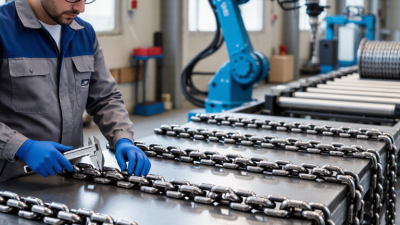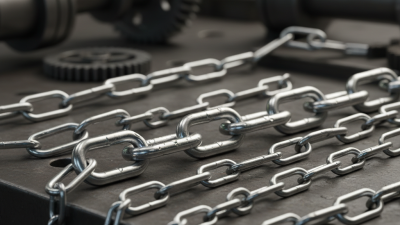
Choosing a reliable stainless steel chain supplier requires more than comparing website prices. Global buyers need consistent quality, clear documentation, and dependable communication across borders.
This guide introduces ten suppliers serving different industrial and commercial markets. It considers material grades, chain pitch, tensile performance, weld consistency, surface finishing, and production capacity. Details such as mill certificates, sample availability, packaging strength, and inspection procedures can reveal how a supplier works beyond its marketing claims. A well-packed carton should protect polished links from scratches, moisture, and unnecessary handling damage.
Real purchasing experience also shows that specifications may change between samples and mass production. That risk deserves attention. Buyers should request current test reports, confirm tolerances, and review replacement policies before placing large orders. Factory audits, video inspections, and small trial orders can provide useful evidence, although none offers complete certainty.
No ranking can serve every application. A construction distributor may value bulk availability, while a marine equipment company may prioritize corrosion resistance and traceable materials. Some suppliers offer custom dimensions and branding, but their minimum order quantities may be less suitable for smaller buyers. This comparison therefore focuses on practical decision points rather than exaggerated promises.
Use the following supplier overview as a starting point. Compare technical fit, service reliability, delivery records, and total landed cost. The cheapest option may not be the most economical. A dependable stainless steel chain partner should make quality easier to verify, not harder.
In 2023, global stainless steel production reached 58.4 million metric tons. This volume shows a deep and competitive supply base for stainless steel chains. It also creates confusion. A large market does not guarantee consistent quality, accurate delivery, or responsible sourcing.
Global buyers should compare ten suppliers through measurable evidence. Ask for material certificates, heat numbers, tensile test results, and dimensional inspection records. Check whether the supplier can produce common grades, including 304 and 316 stainless steel. Chain pitch, wire diameter, weld strength, and surface finish need clear tolerances. Small differences can cause serious problems in conveyors, marine equipment, and lifting applications.
Capacity matters, but it is only one part of the decision. Review monthly output, sampling procedures, packaging details, and average lead times. A reliable supplier should explain how it controls corrosion risks during storage and transport. Traceability should continue from raw material to final carton. That detail is often overlooked. It should not be.
Buyers also need to examine factory audit reports and corrective-action records. A supplier with no recorded problems may simply provide limited information. That deserves a closer look. Pricing should be compared with testing, tooling, inspection, and delivery terms included. The lowest quotation can become expensive after premature wear, rejected batches, or production delays. The 58.4 Mt market figure offers scale, yet careful verification remains the real advantage.
Anonymous supplier-segment benchmark for global procurement screening; company names and brands are intentionally excluded.
| Rank | Supplier Segment | Primary Supply Region | Common Chain Products | Common Stainless Grades | Relevant Specifications | Typical Buyer Applications | Indicative Link Diameter | Buyer Verification Priorities |
|---|---|---|---|---|---|---|---|---|
| 1 | Integrated stainless chain manufacturers | East Asia | Short-link chainLong-link chainWelded chain | 304 / 304L 316 / 316L |
ASTM A580/A580M for stainless wire; ASTM A967/A967M for chemical passivation where specified | Marine hardware, architectural fittings, general industrial equipment | 2–20 mm | Material certificates, weld inspection, dimensional tolerances, passivation records, sample tensile testing |
| 2 | Marine and coastal-equipment chain specialists | Western Europe and East Asia | Anchor chainMooring chainDeck chain | 316 / 316L | Customer drawings; corrosion-control requirements; ASTM A967/A967M when passivation is specified | Boat fittings, coastal installations, dock equipment, saltwater environments | 4–25 mm | 316 chemistry confirmation, salt-spray or corrosion testing when required, proof-load data, surface-finish inspection |
| 3 | Industrial conveyor-chain suppliers | Central Europe and East Asia | Roller chainAttachment chainConveyor chain | 304 / 304L 316 / 316L |
ISO 606 for applicable roller-chain dimensions; purchaser drawings govern stainless construction and attachments | Packaging, food-processing machinery, material handling, washdown lines | 3–16 mm equivalent pitch-system sizes | Pitch and roller dimensions, attachment accuracy, fatigue performance, lubrication compatibility, washdown resistance |
| 4 | Food and hygienic-equipment chain specialists | Western Europe and North America | Hollow-pin chainConveyor chainSanitary chain | 304 / 304L 316L |
ISO 606 where applicable; ASTM A967/A967M for specified passivation; food-contact compliance depends on the final application and jurisdiction | Food conveyors, beverage lines, pharmaceutical equipment, cleanable machinery | 4–13 mm equivalent wire or component range | Surface roughness, crevice-free geometry, cleanability, chemical-resistance data, declarations for the destination market |
| 5 | Architectural and decorative chain suppliers | Europe and East Asia | Ball chainDecorative chainWelded link chain | 304 / 304L 316 / 316L |
ASTM A580/A580M for stainless wire; project drawings for finish, link geometry and load requirements | Lighting, interior design, retail displays, suspended décor, façade details | 1–10 mm | Finish consistency, color and polish uniformity, burr control, working-load declaration, packaging protection |
| 6 | Hardware and general-purpose chain suppliers | South Asia and East Asia | Utility chainProof coil chainLashing accessories | 304 / 304L 316 / 316L |
DIN 5685 or DIN 766 may be referenced for applicable link geometry; exact grade and load class must be confirmed by contract | Hardware distribution, agriculture, garden equipment, light industrial use | 2–12 mm | Breaking-load and proof-load reports, gauge checks, weld integrity, corrosion condition, lot traceability |
| 7 | Custom OEM chain fabricators | North America and Europe | Non-standard linksSpecial attachmentsFormed assemblies | 304L / 316L Other grades by specification |
Customer drawings, PPAP-style documentation where requested, ASTM A580/A580M for wire material when applicable | Automation, medical equipment, laboratory systems, engineered assemblies | Project-specific | Drawing revision control, first-article inspection, process capability, weld procedure, change-notification policy |
| 8 | Heavy-duty stainless chain suppliers | North America and Northern Europe | Large-link chainLifting-related componentsIndustrial restraint chain | 316 / 316L Grade by engineered specification |
Applicable lifting or restraint standard must be identified by use; EN 818 requirements should not be assumed to apply to every stainless chain product | Industrial restraint, offshore support equipment, utilities, heavy maintenance | 10–30 mm | Application-specific design review, proof testing, working-load limits, fatigue data, inspection and marking system |
| 9 | Small-diameter precision chain suppliers | East Asia and Central Europe | Micro chainBall chainInstrument chain | 304 / 304L 316L |
ASTM A580/A580M for stainless wire where applicable; purchaser drawings control precision dimensions | Medical devices, instruments, consumer products, laboratory and control equipment | 0.5–3 mm | Microscopic surface inspection, dimensional capability, burr and particle control, tensile consistency, clean packaging |
| 10 | Regional stock-and-distribution suppliers | Global logistics hubs | Cut-to-length chainPre-packed chainStandard assemblies | Usually 304 / 304L 316 / 316L by order |
Reseller documentation should identify the original material grade, applicable product specification and lot number | Maintenance, repair and operations, hardware resale, low-volume projects | 1–20 mm | Original mill certificates, inventory age, lot segregation, chain-length accuracy, packaging and export documentation |