How to Choose the Right Steel Cable for Your Project

Choosing the right steel cable begins with the job it must do, not the largest number on a product label. A cable lifting a workshop hoist faces different demands from one supporting a gate or guiding a moving platform. Load, movement, exposure, and connection details all matter. Small choices count.

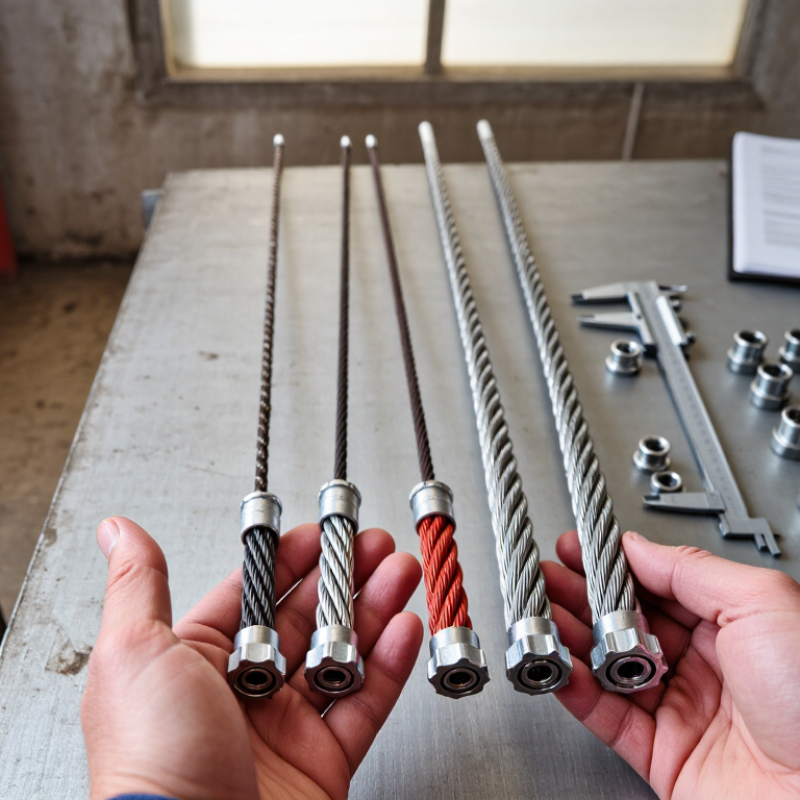
Wire-rope specialist Roland Verreet’s technical work highlights a practical principle: cable construction and operating conditions should be considered together. Treat that as guidance, not a substitute for a project-specific calculation. A six-strand cable may suit some flexible applications, while a more rotation-resistant construction may be appropriate when twisting creates risk. Check the manufacturer’s specifications, including diameter, core type, lay, rated capacity, and recommended fittings. Never choose by diameter alone. A cable that looks substantial can still be unsuitable.

The setting changes the decision. Salt air can accelerate corrosion; repeated bending over a small sheave can shorten service life; sharp edges may damage outer wires. Picture a cable passing over a pulley in a damp loading area. Its material, construction, bend radius, and inspection plan all deserve attention. It is easy to overlook the end termination, too. That is a common—and costly—oversight.

This guide explains how to compare cable types, interpret specifications, and match a steel cable to real working conditions. It also covers installation and inspection basics. Some projects remain ambiguous. When loads, shock, or human safety are involved, ask a qualified engineer or the cable manufacturer to verify the selection. A careful pause beats a confident guess.
How to Choose the Right Steel Cable for Your Project

Define the Project’s Load, Span, and Operating Conditions

Before selecting steel cable, define the actual load—not just the weight shown on a drawing. Include attachments, moving loads, starts, stops, and possible shock loading. Then establish the clear span and allowable sag. A longer span can increase tension, even when the suspended load stays the same. A simple sketch with support locations and load positions helps; field measurements are better. Small differences matter.

Operating conditions narrow the choice further. Note temperature, moisture, chemicals, abrasion, vibration, and how often the cable bends over sheaves. The Wire Rope Technical Board’s Wire Rope Users Manual explains how rope construction and bending conditions affect service performance; check its guidance alongside the cable manufacturer’s published specifications.

For lifting slings in the United States, OSHA 29 CFR 1910.184 requires legible identification of rated capacity and removal criteria. It also calls for removing wire-rope slings with 10 randomly distributed broken wires in one rope lay, or five broken wires in one strand in one lay.

That matters. These are inspection thresholds, not a design target. A cable that passes today may still be wrong for a corrosive, high-cycle application.

Record the load, span, environment, duty cycle, and inspection plan before comparing rated capacities, and have a qualified engineer review uncertain or consequential installations. I’d recheck the assumptions after installation; real supports are rarely as tidy as the drawing.

Compare Cable Construction, Strand Pattern, and Core Type

Steel cable selection starts with construction, not diameter alone. A 6×19 rope has six strands, with a wire-count classification that favors larger outer wires. Those wires generally resist abrasion well. A 6×36 pattern uses more, finer wires and bends more easily around small sheaves. It can wear faster against rough surfaces. These classifications describe families, not one identical layout across every rope.

Core type changes performance, too. The Wire Rope Users Manual, 4th edition, reports that comparable ropes with an independent wire rope core (IWRC) can provide roughly 7.5% greater strength than fiber-core ropes. Treat that as a guide, not a guaranteed uplift; construction and diameter affect rated strength. IWRC also supports the strands under crushing loads and tolerates more heat. Fiber cores are more flexible and can retain lubricant.

Picture a cable passing repeatedly over a compact sheave, then sitting under load on a grooved drum. A finer strand pattern may bend better, while an IWRC may better resist crushing. Check the manufacturer’s load tables and the equipment maker’s minimum sheave-to-rope diameter ratio before choosing. The detail people miss? A stronger core cannot fix poor groove fit or neglected inspection. I would still verify the exact rope specification against the operating conditions.

Select a Suitable Steel Grade and Corrosion Protection

A cable’s steel grade must match both its load and its surroundings. For lifting or repeated bending, check the rope’s minimum breaking force, fatigue needs, and applicable specification, such as ASTM A1023/A1023M. Higher tensile strength is not automatically better; construction, diameter, and sheave size also affect service life. Measure the actual load path.

Corrosion protection deserves equal attention. The NACE International IMPACT study estimated corrosion costs at US$2.5 trillion globally in 2013, about 3.4% of global GDP. That figure covers many industries, not steel cables alone, but it shows why small coating choices matter. Galvanized wire rope is often practical outdoors, while stainless steel may suit wet or washdown settings. In chloride-rich air, however, stainless grade matters: 316 generally resists pitting better than 304, yet neither is immune to damage.

Look closer at the installation. A cable passing over a salt-splashed deck needs different protection from one inside a dry warehouse. Check coating condition near end fittings, where water can collect. No coating is magic. I would also verify maintenance access before specifying a premium material; an overlooked inspection schedule can undo a careful grade choice.

Check Strength Ratings, Safety Factors, and Applicable Standards

Choose cable by its rated working load, not its diameter alone. Construction, steel grade, core, termination, and load direction all affect capacity. ASME B30.9-2021 specifies a 5:1 design factor for wire-rope slings: minimum breaking force is five times the rated load. That is not a fivefold allowance for extra cargo. The rating already reflects the required margin. Check the manufacturer’s load table for the exact rope and end fitting.

Angles can change the force sharply. On a two-leg sling at 30 degrees above horizontal, each leg carries the full load; at 60 degrees, each carries about 0.58 of it. One detail is easy to miss. A small angle increase can overload a leg. ISO 2408:2017 sets minimum breaking-force requirements for steel wire ropes, while ISO 4309:2017 describes inspection and discard criteria for crane ropes, including broken wires and diameter loss. Match the cable’s certificate and inspection history to those requirements. Corrosion, crushed strands, or a kink may justify removal from service, even when the rope still looks substantial. Standards help, but site conditions are rarely as tidy as a table.

How to Choose the Right Steel Cable for Your Project

Compare strength ratings using an appropriate safety factor. The bars show calculated working-load examples for a hypothetical cable with a 10 kN minimum breaking force.

Working-load examples are calculated as minimum breaking force divided by safety factor. They are illustrative, not rated values for a specific cable. Actual capacity depends on cable construction, diameter, grade, terminations, installation, and service conditions. Select the required factor and verify ratings against the applicable standard and project requirements.

Confirm Compatibility with Fittings, Equipment, and Installation Needs

A steel cable is only as reliable as the fittings and equipment around it. Match the cable’s actual diameter, construction, and rated capacity to the sockets, clips, or other approved terminations. A fitting made for the right diameter may still be unsuitable for a different cable construction. Check the fitting maker’s specifications, and don’t guess from appearance. Small details matter. A worn connector can look acceptable in a quick inspection.

Then check how the cable will travel through the equipment. Sheave diameter and groove shape affect bending and wear; the drum must also hold the required length without crowding. Confirm clearances, end access, and the cable’s permitted bend radius before installation. Corrosive moisture, abrasive dust, and repeated movement may influence the suitable cable and fitting materials. It is easy to reuse old measurements, but a stretched or worn cable can give a misleading reading. Verify the load requirements, including movement or shock where relevant, against documented ratings. If specifications conflict or the installation is unusual, pause and ask a qualified professional to review the setup.